


|
Listen to this article now
Getting your Trinity Audio player ready...
|
Alma Perdomo recovers the family recipe book of Josefa Martínez Feo and, with the chef Rayco Arbelo, returns to the present 50 elaborations of the 19th and 20th centuries
Canarian cuisine has a much broader history than what its best-known dishes tell.. There was a time when, in certain houses on the Islands, puddings were prepared, lampred, compounds, sausages and preparations with a clear European influence. A domestic gastronomy, refined and practically disappeared from our culinary memory that now returns to the table thanks to Recipes from Canarian memory. A journey of two centuries through Josefa's kitchen, the book published by Ediciones Remotas that brings together 50 historical recipes recovered by Alma María Perdomo Romero and reinterpreted by the Lanzarote chef Rayco Arbelo.
The origin of this unique publication has something of a chance discovery. After the death of his father, Alma Perdomo He found among his belongings an old handwritten notebook that he did not know existed.. It belonged to his great-grandmother, Josefa Martínez Feo (I would do, 1886-1962), and contained a repertoire of preparations that had little to do with the most widespread image of the traditional gastronomy of the archipelago..
«I found that notebook among my father's objects. It was a modest volume, of hard covers aged by time, but inside it kept a clear handwriting, elegant, serena», the author writes when remembering the discovery.
That manuscript ended up becoming the starting point for an investigation that transcends cooking and delves into social history., family customs, commercial exchanges and the role of women in the transmission of gastronomic heritage.
A Canary Islands that also cooked European style
Josefa belonged to a wealthy rural family in the north of Lanzarote. His recipe book reflects the eating habits of an environment where the kitchen did not respond exclusively to the need to eat., but also to certain social and cultural conventions.
The result allows us to peer into a less studied aspect of Canarian gastronomy, influenced by the commercial and cultural relations that the Islands maintained with other territories.
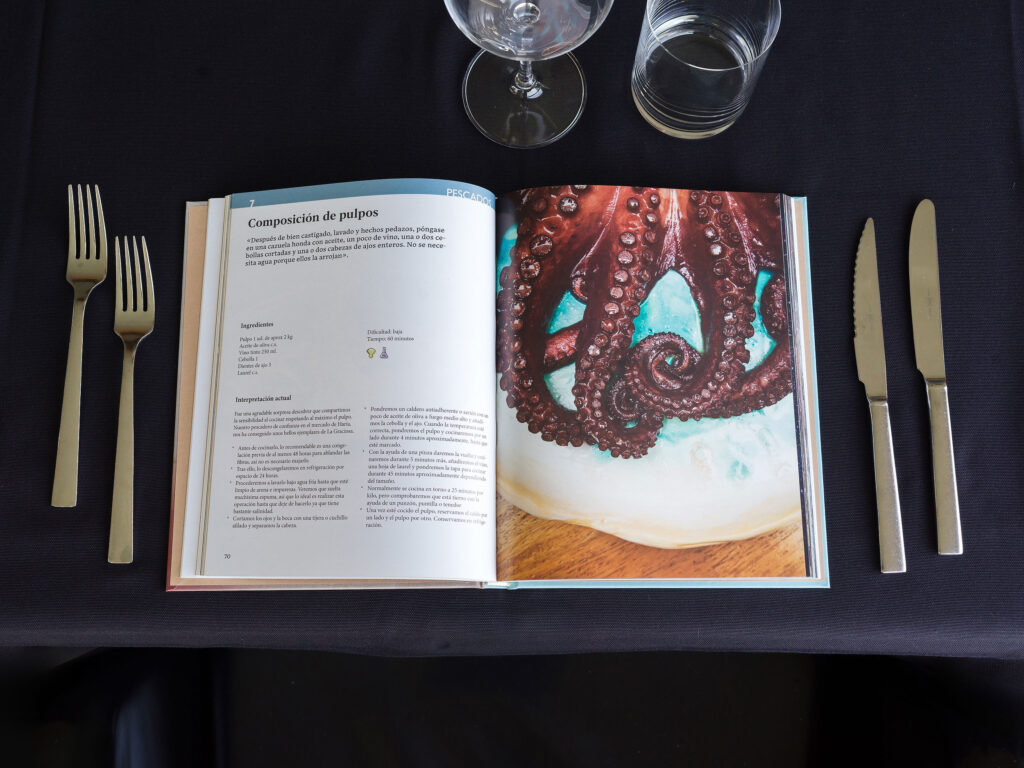
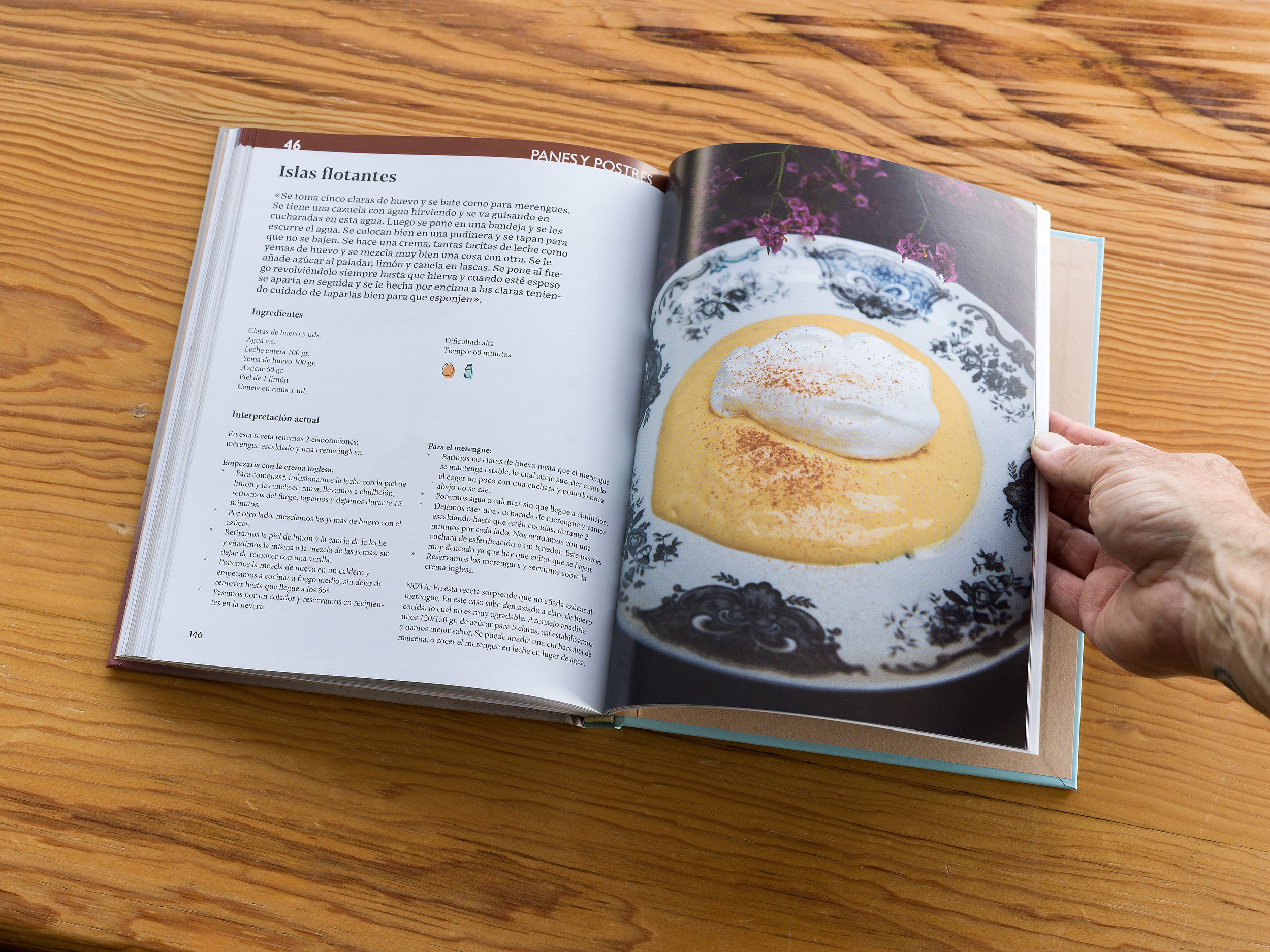
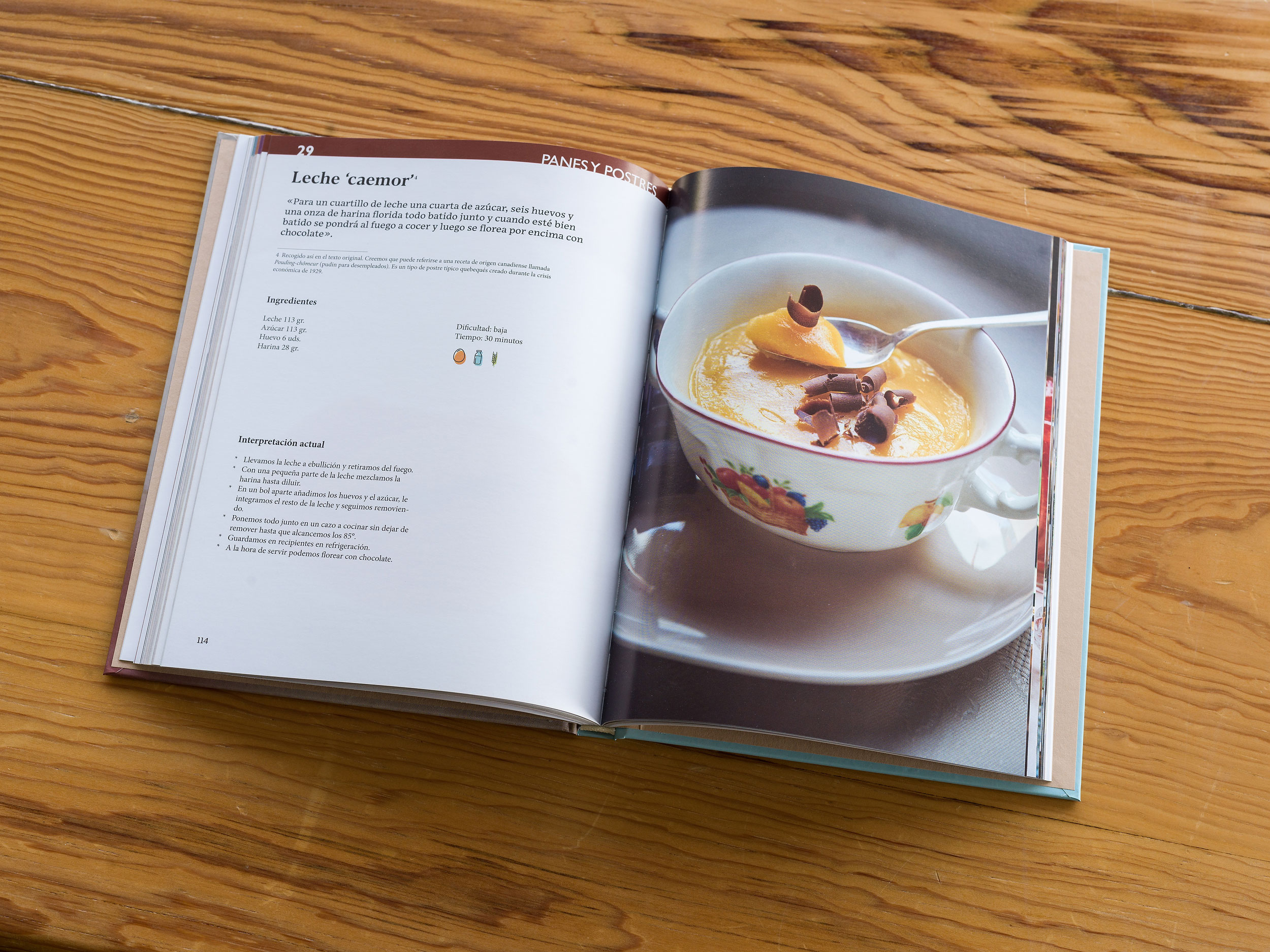
In its pages preparations appear such as octopus omelette, raw grouper compound, leg of mutton, tongue lamping, sausage, potato bread, chocolate pudding, orange flan, floating islands or leche caemor. Preparations that reveal connections with the kitchens of England, France, Portugal and Cuba, in addition to African and Moorish influences.
The investigation of Alma Perdomo It allows us to contextualize these dishes and understand how certain ingredients and techniques became part of the Canarian tables of the late 19th century and early 20th century..
But the interest of the work does not lie solely in recovering little-known recipes.. It also invites us to review a too limited vision of what we understand by traditional Canarian cuisine., incorporating other social realities that also contributed to building our food heritage.
Josefa and Rayco, a dialogue through the stove
One of the most attractive aspects of the book is the participation of Rayco Arbelo, Lanzarote chef linked to contemporary gastronomy projects and culinary advice.
His job has been to select, next to Alma Perdomo, fifty preparations from the original manuscript and transfer them to the possibilities of today's kitchen, respecting its meaning and historical references.
Each recipe thus establishes a conversation between two eras.. Josefa's formulation appears first, with its language and procedures typical of its time. Then comes Arbelo's interpretation, that adapts ingredients, quantities and techniques to allow those preparations to be cooked again.
The proposal avoids turning the recipe book into a simple historical curiosity. His true ambition is recover a kitchen that can return to homes, preserving the memory of those who practiced it.
The work incorporates, besides, a reflection on the contribution of women to the construction of Canarian gastronomic culture. For generations, Much of that knowledge remained in private notebooks., transmitted in the domestic sphere and rarely recognized as part of cultural heritage.
Josefa Martínez Feo represents many of those women who kept recipes, techniques and knowledge without imagining that, decades later, His annotations would allow us to reconstruct a part of the culinary history of the Islands..
A book to cook and understand the past
Recipes from Canarian memory has 176 pages, photographs of Daniel Cabecera and design of Ruben Acosta Morales. The edition, in hardcover, is in charge of Remote Editions, independent publisher based in Lanzarote specialized in publications linked to the historical and cultural heritage of the Canary Islands.
The volume, which is already in the bookstores of the archipelago, has a price of 26 euros and has had the support of the Lanzarote Cabildo and the Chacón group.
The researcher and university professor Yanet Acosta, project promoter recetascanarias.org, considers that the publication transcends the recovery of culinary formulas to delve into the social context, political and economic of the time and in the life of the woman who wrote them.
In summary, Josefa's notebook not only allows us to discover how cooking was done in a house in Haría more than a century ago. Also remember that The gastronomic memory of the Canary Islands has been built with many different cuisines, some very well known and others that remained for generations in the silence of homes..
A part of that history has just recovered its flavors.

