


|
Listen to this article now
Getting your Trinity Audio player ready...
|
The contest brings together twelve sea salts of six farms on the Islands, which will be evaluated blindly by a specialized panel
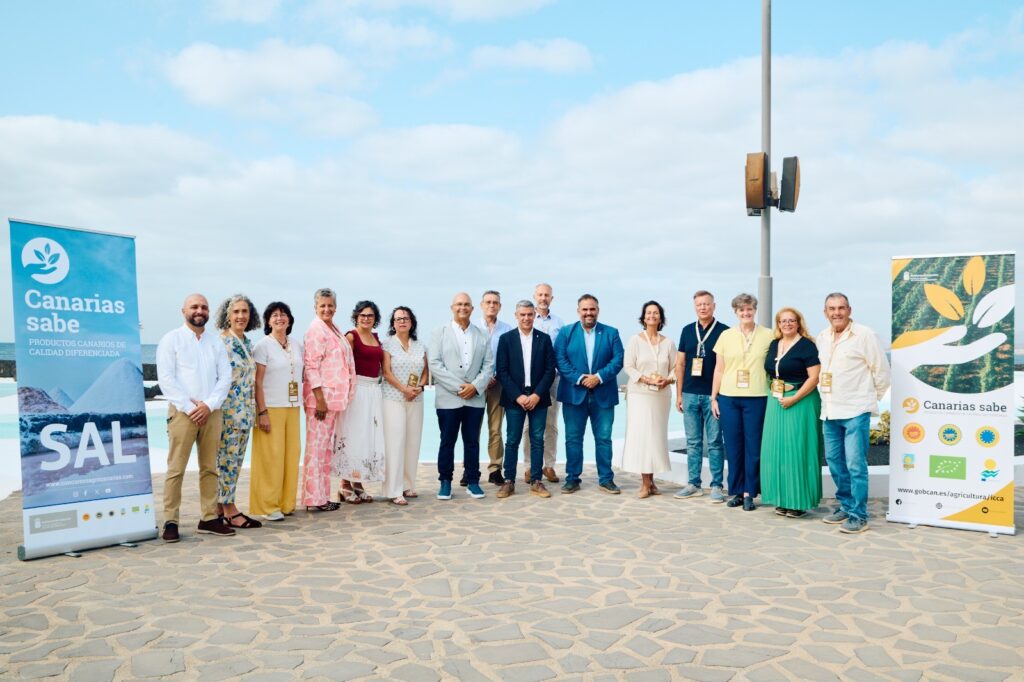
Twelve sea salts made in the Canary Islands are undergoing the judgment of a specialized panel these days to determine which are the best in the Archipelago.. Lanzarote hosts the eighth edition of the Official Agrocanarias Sea Salt Competition, which brings together productions from the six salt mines currently active in the Islands.
The event is held at Fermina Islet and has samples from three salt flats in Gran Canaria and one in Lanzarote, Fuerteventura and La Palma, respectively.
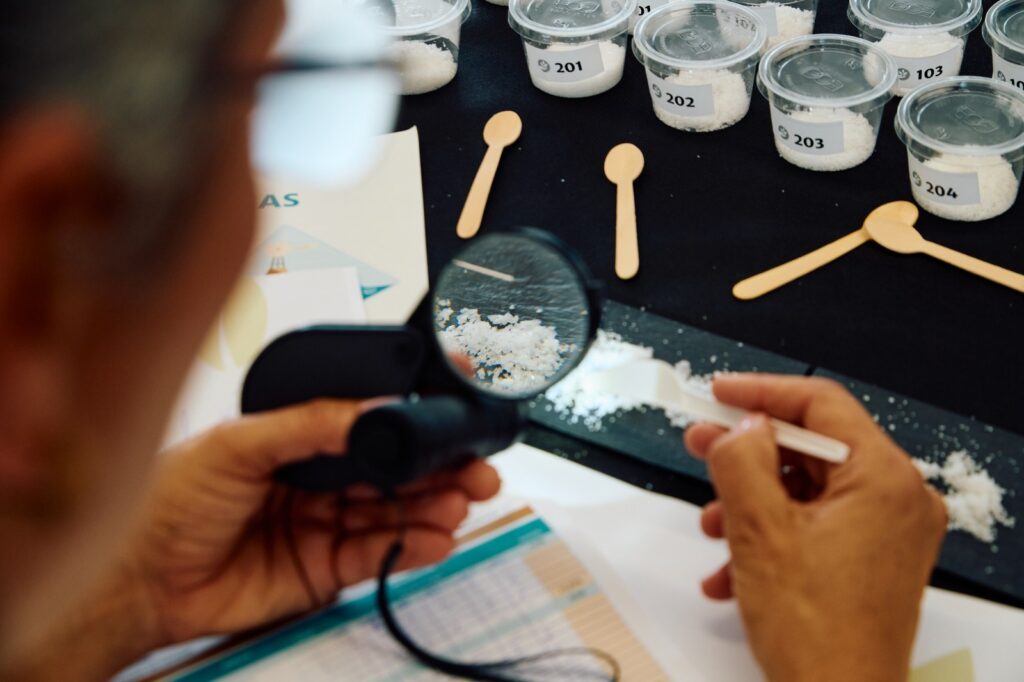
References will be valued by blind tasting, after a previous session aimed at unifying the technical criteria of the panel. The tasters will evaluate the characteristics of each sample without knowing its origin and will decide which ones deserve big gold medals, gold medals and silver medals.
But there will also be three especially relevant recognitions: Best Canary Islands Sea Salt, Best Organic Sea Salt in the Canary Islands and Best Innovation, Image and presentation 2026.
Much more than coarse salt
The contest also serves to take the pulse of an activity that remains relatively small in the Canary Islands., but that maintains a strong connection with the landscape, the gastronomy and agricultural heritage of the Islands.
Currently they remain six salt flats in operation, which together produce 2.700 tons of sea salt per year.
Traditional coarse sea salt continues to be the main preparation, although the offer has diversified considerably. The Canarian salt flats also produce fleur de sel, Hall nice, scales, wet salt, salt stone and other presentations, in addition to certain productions intended for non-food uses.
Lanzarote has an especially significant weight within this activity. The island concentrates the 56% of the effective surface area of salt production in the Canary Islands, ahead of La Palma, With a 21%; Gran Canaria, With a 18%; and Fuerteventura, With a 5%.
From the saline directly to the consumer
One of the most revealing data of the sector appears in its way of marketing.
Supermarkets and hypermarkets concentrate the 41% of sales, while direct sales already represent a 38,1%. Manufacturers acquire another 10% of production and the rest is distributed among intermediaries, exporters, traditional shops, restoration and sale online.
More than half the salt, he 53,9%, is marketed within its own local market. Other 30,3% sold in the rest of the Canary Islands, while the national market represents a 7,4% and the international one 8,4%, although this last data also includes purchases made in the salt mines by foreign visitors..
Diversification has also reached the way of teaching the product. Five of the six farms currently offer visits, workshops or experiences, in addition to having a store. Two have a cafeteria, two others with restaurants and one also incorporates a museum.
Sea salt thus becomes not only a seasoning, but rather a gateway to landscapes and productive processes that are increasingly present in the gastronomic and tourist offer of the Islands..
A sector that studies protecting its origin
The contest also precedes a Canary Islands Sea Salt Producers Day, designed for farms to share experiences and analyze common problems in the sector.
Among the issues that will be on the table is the possibility of moving towards some type of European figure of differentiated quality that allows protecting the origin and traditional methods of obtaining Canarian sea salt.
During the opening of the contest, the Canarian Minister of Agriculture, Narvay Quintero, He precisely pointed out the convenience of improving consumer knowledge about this product and its artisanal methods.. The Environment Minister of the Lanzarote Council also participated., Samuel Martin, and the director of the ICCA, Luis Arraez.
The names of the award-winning salts will be known in the coming weeks. Until then, Twelve creations will compete to demonstrate that, also when we talk about something seemingly as simple as salt, the origin, the production method and the territory matter.

