


|
Listen to this article now
Getting your Trinity Audio player ready...
|
El chef de El Pellizco explora la cabra majorera con maduraciones, liofilización y charcutería dentro de su menú ‘La Guantanamera’
La cabra majorera puede ser un estofado, pero también un embutido, una carne madurada durante meses o incluso un helado. Rigoberto Almeida, head of El Pellizco Costa Calma, lleva tiempo investigando hasta dónde puede llegar gastronómicamente uno de los productos más estrechamente vinculados a Fuerteventura.
El resultado ocupa buena parte de la segunda mitad de ‘La Guantanamera’, el menú con el que Almeida articula su particular viaje culinario entre Canarias y Cuba, sus dos territorios de referencia. En esta parte de la propuesta, dedicada a la cocina de interior, la cabra deja de desempeñar un papel secundario para convertirse en hilo conductor.
Almeida, Bachelor in Food Chemistry, applies unusual techniques to meat in its traditional treatment and seeks new textures, flavor concentrations and utilization possibilities.
The work comes at a time of special visibility for El Pellizco, recently incorporated as an establishment recommended by the Michelin Guide after a prolonged absence of Majorero restaurants in this category.
A 'cabrabushi' that needs months
One of the most unique preparations is the one named ‘cabrabushi’, an interpretation of the Japanese technique used to produce katsuobushi, traditionally made from dried bonito.
In this case, Almeida starts from a boneless goat's leg., that binds until obtaining a cylindrical piece. He then subjects her to a smoked 48 hours to 62 degrees, before starting a long drying phase.
The meat remains 65 days drying in the sun in the restaurant facilities and subsequently passes around other 60 days in maturation chamber, at a humidity of 75% and between three and four degrees of temperature.
Once the process is completed, the chef cuts it using a kezuriki, the traditional Japanese utensil used to obtain the fine shavings of katsuobushi.
On the plate it appears accompanied by other preparations from the goat itself., including meat and a concentrated juice cooked with kombu, plus liver worked with fermented milk and goat yogurt.
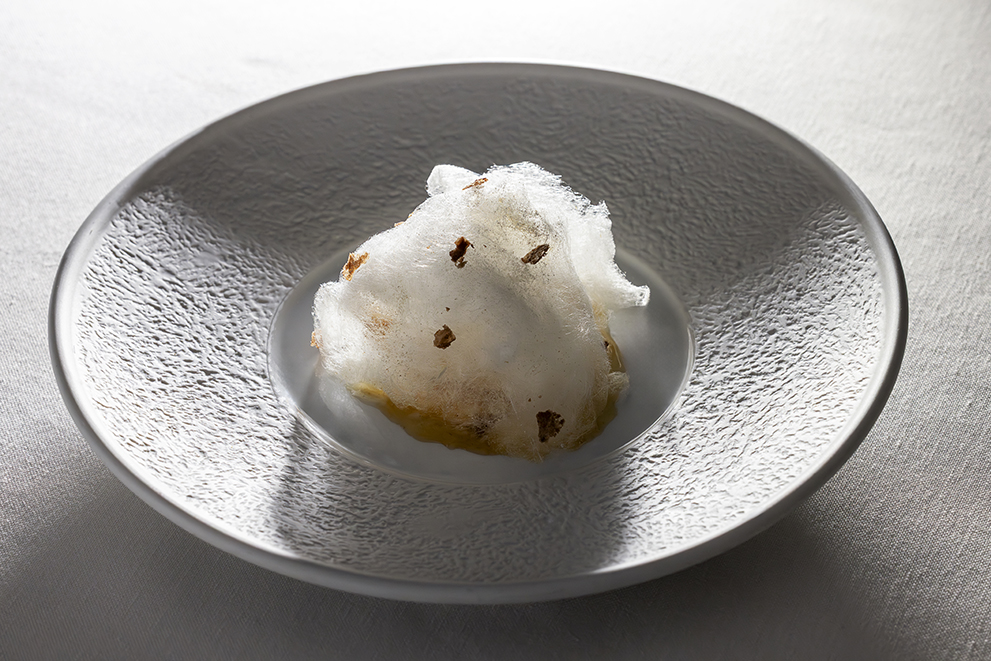
The stew turns to dust
Another of the ideas of 'La Guantanamera' part, paradoxically, of a much more recognizable preparation: the stew.
The chef freeze-dried and converted into powder, concentrating its flavor to later incorporate it into a crunchy cookie made on a cassava base.
The technique thus transforms a recipe traditionally associated with long cooking and honeyed textures into a dry and crunchy preparation., although maintaining the goat stew as a taste reference.
And there is still one of the most radical proposals on the menu: and ice cream made with goat meat and fat, taken to dessert territory.
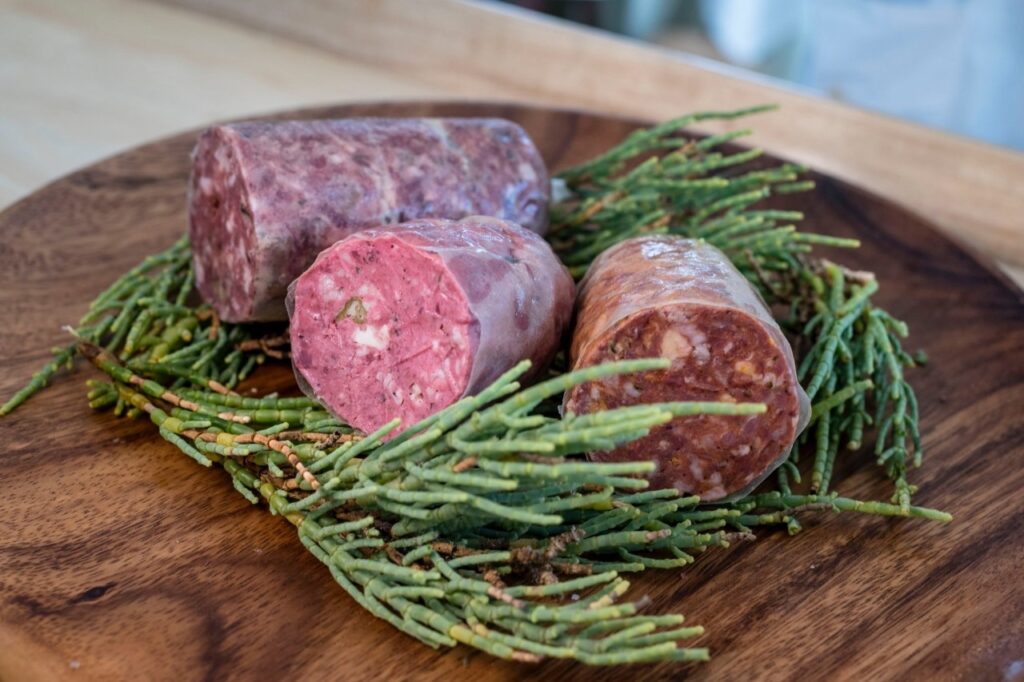
Mortadella, chorizo and goat sausage
Almeida's most recent research has been directed towards charcuterie.
Working exclusively with goats presents technical difficulties derived, among other issues, of its low fat content. The chef claims to have dedicated a good part of the research to understanding and controlling the processes associated with meat proteins until achieving a texture suitable for this type of preparation..
They have already left that job three goat sausages.
A mortadella incorporates piparra, black pepper and different seasonings; The chorizo is made by manual kneading with La Vera paprika and saffron.; while the salchichón introduces another ingredient closely linked to Fuerteventura: the date.
All three are served freshly finished in the wood-fired oven on the menu.. Almeida is also working on the possibility of developing its marketing outside the restaurant..
Fuerteventura and Cuba in the same story
All of these preparations are part of a cuisine that El Pellizco has built around the dialogue between Fuerteventura and the Cuban Caribbean.
In 'La Guantanamera', The Majorera goat does not appear only as a traditional product to be preserved, but as raw material on which to experiment. Prolonged smoking, maturations, fermentations, freeze drying, charcuterie or Japanese techniques coexist with recognizable flavors from the island's recipes..
Almeida continues working on this line of research with a view to new menu that El Pellizco plans to launch in November, with which it aims to delve deeper into that culinary narrative between its two origins.
And perhaps therein lies the most interesting part of the project.: Do not try to disguise the Majorera goat as something else, but to wonder how many different things it can be.

