


|
Listen to this article now
Getting your Trinity Audio player ready...
|
The flower of salt of Salinas del Carmen, in Fuerteventura, is chosen as the Best Sea Salt in the Canary Islands 2026 in the Agrocanarias contest
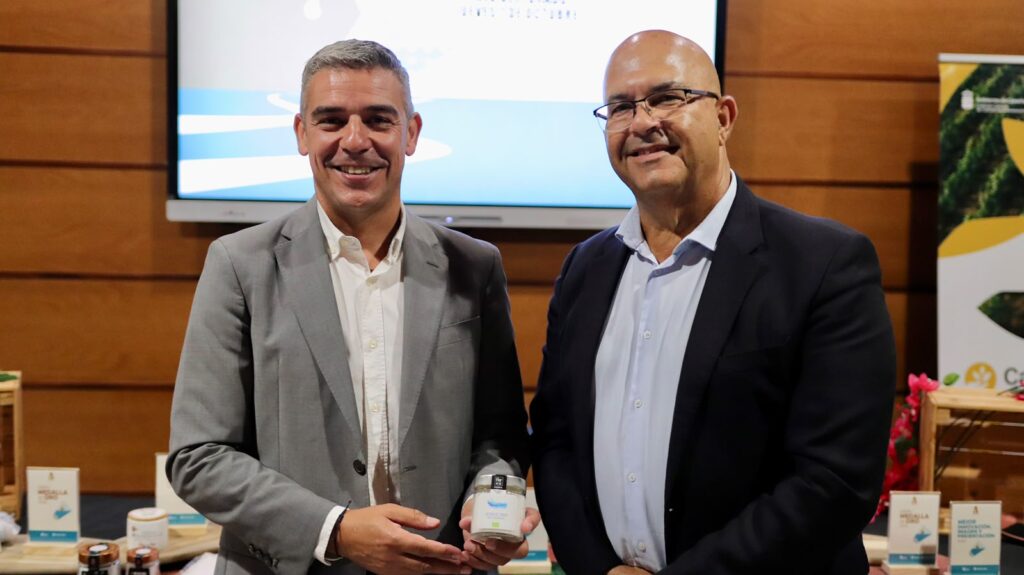
The flower of salt from Salinas del Carmen, in Fuerteventura, once again stands at the top of the archipelago's salt production. Prepared by Proasur Cultural Management, has been recognized as Best Canary Islands Sea Salt 2026 in the Official Agrocanarias Competition, celebrated this year in Lanzarote.
It has not been the only recognition for this artisanal production from Antigua. Fleur de sel also obtained the distinction of Best Organic Sea Salt in the Canary Islands and a big gold medal, exactly the same awards achieved in the previous edition. The Majorera firm adds another gold medal this year for its Virgin Sea Salt.
The record also leaves prominence for Lanzarote. The salt flower from Salinas de Janubio received the award for Best Innovation, Image and presentation 2026, plus a big gold medal. Janubio achieved another great gold with its production in the Virgin Sea Salt category.
Las Fuencaliente Salt Flats, in La Palma, y Bocacangrejo Salt Flats, in Gran Canaria, They completed the recognitions with gold medals in the fleur de sel category..
Nine prizes among four islands
The competition awarded a total of three special distinctions and six medals—three grand golds and three golds—. By islands, Fuerteventura accumulated four recognitions, Lanzarote three and La Palma and Gran Canaria one each.
The ruling corresponds to the tasting held last 17 of September in the Fermina Islet, in Reef, in which twelve salts from the six salt mines that remain active in the Canary Islands participated: three from Gran Canaria and one from Lanzarote, Fuerteventura and La Palma.
The samples were examined blindly by eleven specialists in the analysis of agri-food products.. Aroma, flavor and texture were among the main parameters evaluated, next to color, consistency and granulometry.
The contest is organized by the Canarian Institute of Agri-Food Quality (ICCA), dependent on the Government of the Canary Islands, and in this edition it had the collaboration of the Cabildo of Lanzarote.
From the Atlantic to the pits
Beyond the prize, Salinas del Carmen preserves a production system closely linked to the coastal landscape of Antigua. The farm is located in a declared area Asset of Cultural Interest and maintains manual collection based on traditional techniques.
The sea itself starts the process. The impact of the waves against the rocks generates foam with a high saline concentration that is collected in the jetty.. Thence, The water passes to the cookers through the combined action of the tide, The wind and gravity, without the need for machinery for extraction.
When it reaches the necessary conditions, the salt master guides the water to the pits. The sun does the rest: Progressive evaporation allows the salt to deposit until it is later collected.
The resulting fleur de sel has a bright white color and, according to information provided by the organization, contains trace elements such as magnesium, zinc and calcium. It is also characterized by a mild flavor, without additives and without the bitterness or dryness in the mouth that can appear in other salts.
The Agrocanarias Contest thus puts the focus on a relatively small-scale activity but with an important cultural and gastronomic component.. At the moment, The Canarian salt flats together produce around 2.700 tons per year, maintaining production systems that are part of the productive heritage of the islands.

