


|
Listen to this article now
Getting your Trinity Audio player ready...
|
Aguas de Fontanales closes after almost 70 years of artisanal cheese, a gold medal in Agrocanarias and a life dedicated to the trade
The closing of Aguas de Fontanales Cheese Factory no longer belongs to the immediate present, but perhaps that is why it allows us to better see what goes out when a small artisanal cheese factory stops working.. En Moya, Gran Canaria, has closed a house linked for almost seven decades to the profession of Olga Lantigua Arencibia y José Luis Arencibia Arencibia, marriage that turned cheese making into a daily routine, family support and way of life.
An acknowledgment before goodbye
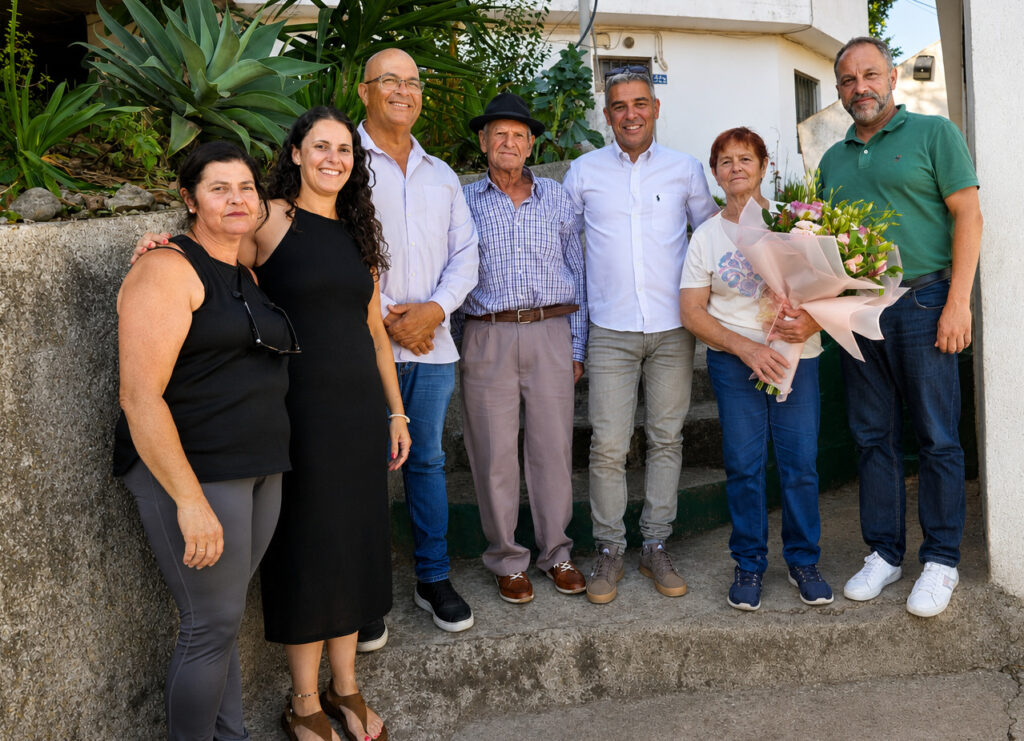
The news came accompanied by institutional recognition. The Minister of Agriculture, Cattle raising, Fisheries and Food Sovereignty of the Government of the Canary Islands, Narvay Quintero, and the mayor of Moya, Raul Afonso, They visited the facilities to put a name and face to a career that is already part of the municipality's cheese memory..
next to them, the director of the Agri-Food Quality Institute, Luis Arráez and the department's technician and consecrated cheese master Isidoro Jiménez.
Aguas de Fontanales closed, besides, shortly after receiving a gold medal in the Official Agrocanarias Cheese Competition 2026 for its semi-cured raw goat's milk cheese. It still has some poetic justice: say goodbye with a prize, when the prize does not change the ending, but it does help explain the path taken.
Olga started in the trade when she was just nine years old.. For almost seventy, it maintained a way of making cheese passed down from generation to generation., with his own livestock, a very limited production and an artisanal process that today is almost exceptional due to its scale and patience.
The cheese factory that never dried out
There is a phrase of his that sums up that life around milk better than any speech., curd and maturation: “My cheese rack has never dried out., “Just the eight days I was on my honeymoon after getting married”. He doesn't just talk about work. Talk about continuity.
The production of Aguas de Fontanales was small, slow and thorough. Just a few cheeses a day. The curd was processed slowly before being transferred to wooden cheese makers preserved from the beginning.. After, The pieces matured in a cave located in the family home itself.. Nightly, Olga reviewed them and turned them over to encourage their evolution..
That nocturnal gesture explains many things.
Own milk, cave and patience
The cheese factory made its products with milk from its own cattle, composed of almost thirty goats of the Majorera breed. Its annual production was around 2.000 kilos of artisan cheese, with pieces recognized for their intense flavor and especially creamy texture.
Behind was the care of the process, directed by Olga, and livestock feeding, by José Luis. Few words better summarize an elaboration of this type than those three: leche, time and hands.
Councilor Narvay Quintero stressed that the awards obtained by the cheese factory make visible a life of work and effort, but also the quality of elaborations born from the territory, of knowledge of the trade and an artisanal way of working maintained despite the passage of time.
A loss for Moya
The mayor of Moya, Raul Afonso, placed the closing in a local and sentimental dimension: Each cheese made by Olga and her family carried with it a part of the history of the Villa de Moya.. It is not a minor phrase. In the Canary Islands, many products survive not only because of their quality, but because certain families have supported them when there were no sources, no campaigns, nor large commercial channels.
Also Carla Vera, granddaughter of the owners and manager of Proquenor, He highlighted that the recognitions received in recent years have served to value a long career. As transferred, Olga and José Luis finish this stage especially satisfied.
The relief that does not always arrive
The closure of Aguas de Fontanales leaves an uncomfortable question for the sector: What happens when small-scale productions disappear?, linked to specific people, to specific caves, to own animals and ways of doing things that do not always find relief.
Not everything is lost at once. Sometimes it is lost in silence, when a cheese cellar dries for the last time.
The prizes remain, the memory of those who tried their cheeses and the example of a life worked without interruptions. There is also a simple teaching: Canarian cheese is not just a gastronomic category. It's territory, time, manos, cattle, family and accumulated knowledge.
Aguas de Fontanales has closed its doors. Your story, however, It is already part of the cheese heritage of Gran Canaria.

