|
Listen to this article now
Getting your Trinity Audio player ready...
|
Article based on the notes from the presentation by Toni Massanés,
director of the ALICIA Foundation,at the I International Congress
of Gastronomic Journalism of Lanzarote
Published: Pellagofio magazine
Date: December 2018
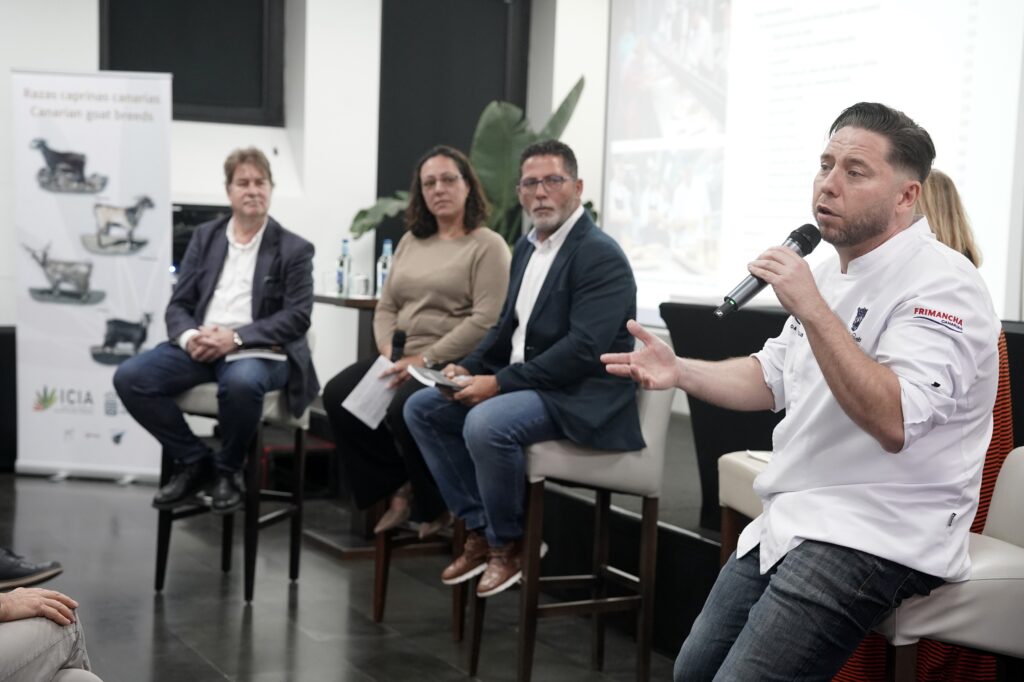
First International Congress of Gastronomic Journalists. Sitting among speakers, In the center, Toni Massanés. Along with him there are also Duarte Calvão (Portugal), Eleonora Cozzello (Italia) and Matthias Crown (Sweden). The Villa de Teguise hosted the meeting of these and other experts.
We were waiting for Massanés's intervention about the pleasure of eating and he, as expected, He went through really curious twists and turns to defend his final proposal, which I leave in suspense for the moment until it reaches the climax so that the reader has the arguments presented by him..
What was said. Concentration of journalists specialized in gastronomy – on the occasion of the Food and Wine Festival of the island of the volcanoes – who were joined by relevant chefs – Erlantz Gorostiza or Paco Pérez – to analyze, debate and dissect about indicators, elements and themes that we gastronomic communicators must also face and review. I confess that I acquired a ring notebook from the fat ones, hard cover, to take notes.
In the end I completed three quarters of the pages with the First International Congress of Gastronomic Journalism (International Food Writers Meeting, IFWM), really innovative and precursor and that took as a common thread what today (in key of 2018) It is the indissoluble tandem gastronomy-primary sector-tourism, and vice versa.
Among the guests, and even though there was no waste with everything that was going to happen, The aforementioned conference by Toni Massanés drew attention.
Semantic field of gastronomy
The speaker announced that he intended to talk about Gastronomy, which “leads us to a semantic field that is deformed towards different angles, depending on what interests us: cocina, haute cuisine, the food value chain, high-end products…”.
The speaker quickly jumped into action. “Could gastronomy be food?” + emotion? Could be, Yeah. Then, Would it be exclusive to human beings??, of the refined human being? Or could we conceive gastronomy as food? + placer? Could hedonism be what differentiates us as a species?”
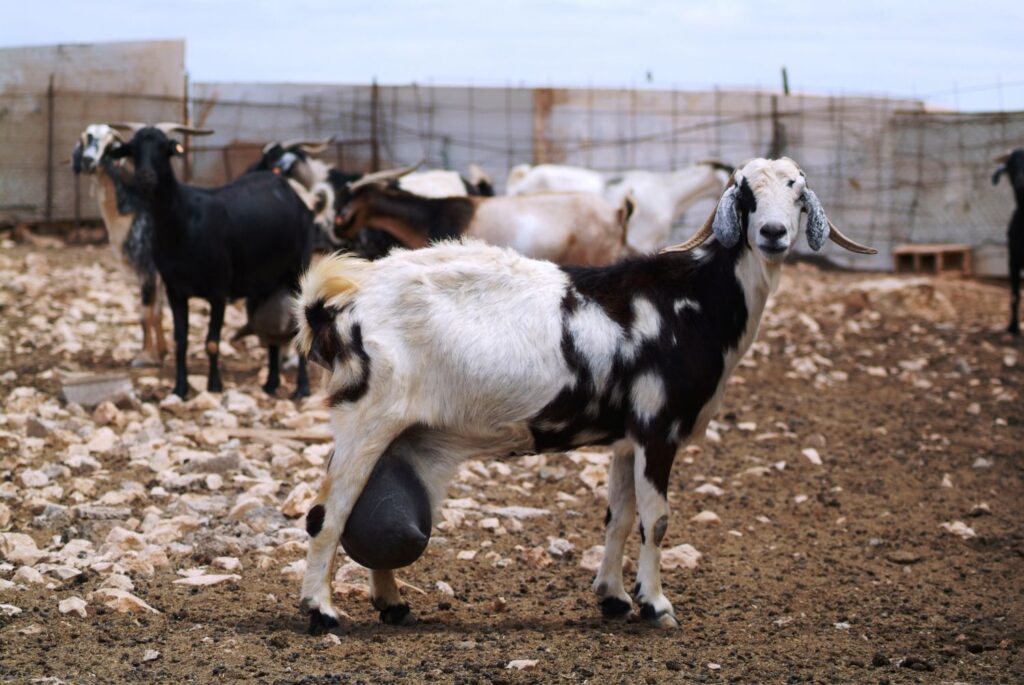
This is how the plot development woke up with an unusual guest: the majorera goat, “which has led to those internationally recognized cheeses”, apostille. “The Majorera goat, just like us, eat through emotion; It is a species that is especially adapted to these arid terrains of the islands and takes not so much grass for its nutrition as the tender parts., bushes bushes, etc.”.
The neophilia of the Majorera goat
Curious launch of an intellectual argument that is at least unpublished. “What the Majorera goat does – Massanés explained – is try everything and it is this neophilia, the tendency to try new things in your arid environment, the one that has given him the option to adapt. In this species it is accentuated: The Majorera goat knows that it is more beneficial than harmful to try everything new and whether it likes or doesn't like those things., whether they make you hungry or not, pleasure or disgust…”.
At this point and in a relaxed moment, He addressed the director of PELLAGOFIO, Yuri Millares, “Anything that doesn't add up, you tell me.”, "You know a lot about this.", with the subsequent smiles of those present.
“Therefore – continued the speaker –, our good friend tests, gets excited and decides what to do. It is an emotional mechanism: the pleasure, the rejection, appetite is subordinated to this emotional system, which is what makes all animals act, nutritionally speaking, according to what suits them. "I wanted to draw attention to this aspect to eradicate the idea that pleasure only has to do with the human being.".
The expert considered that this prologue contextualized us in terms of understanding the evolution. “We then classify pleasure as an indicator of what is best for us in gastronomy.”; Humans often value pleasure as an end, but in reality it would be a system of identifying what is best for us and what differentiates us., at meal time, of other species”.
The human being cooks
From the hand of André Holley, scientist who wrote “The Sweet Brain”, Massanés made the obvious statement that “snails or Majorera goats do not cook., Of course it is; We differ from the rest of living beings by our dietary strategies.: the human being cooks, we transform reality to improve it, in this case to eat; we don't cook, “But we cook when we make a salad or a tartare.”.
“We make good things to eat, that we like, that cause pleasure and is what differentiates us evolutionarily, but, ¡ojo! We can no longer survive without cooking; our digestive tract has become smaller because we have transformed the nutrients. "We could no longer live without cooking.".
So, what is kitchen?, he was wondering. Rumor in the room.
Human food strategy. “We apply ideas to the products of the environment, technology, if we can call it that. in mythology, Prometheus stole fire and from there applied art arose, the science of doing things with it: the ability to handle it”.
Food has to be sustainable
Human beings made a qualitative leap. But just like for any other living being, “food has to be sustainable”. There, Massanés brought up the relationship between haute cuisine and sustainability. “A restaurant where they cook 40 people for 20 diners is not sustainable. We can do a calorie calculation. Haute cuisine is not sustainable, nor necessary, but another thing is that it facilitates an inventory of new ideas. There is a type of food – patron saint festivities, etc. – that do not serve specifically for nutrition but to create community, consolidate ties”.
“Haute cuisine is like haute couture.”: a test bank that does not have to serve any particular purpose – Toni Massanés appreciated –. Ideas are put together and the more that arise, the more reservoir of future possibilities.. The problem is that, increasingly, we eat out: where is the limit, the borders? The panorama has changed since we have seasonal produce all year round”.
Raw materials and primary sector
“Without raw material, no matter how much knowledge the human being has, we will die of hunger. It's a no-brainer. Here we are going further trying to analyze what is the role of the primary sector that we need; or what the primary sector needs for this relationship to work properly”, raised.
“We don't eat rice, we eat it cooked with vegetables, in paella or sushi... This determines the way of eating in every area of the planet and thus defines the cuisine in each place., at every moment: Lanzarote cuisine, dish from the Canary Islands, kitchen of this or that cook. To the Majorera goat – he continued –, who is prone to neophilia, more opportunities appear to survive; The same thing happens to us and that's why we like creative cuisine., because every idea is an opportunity to be stronger”.
An example of “brutal” creativity for him and of a sustainability studied by the main Environmental faculties in the world “we have it at our side: The Geria of Lanzarote. This is an impressive work of engineering that proves that nature is neither good nor bad.: it's relentless. Does 300 years the ashes of Timanfaya covered with ashes and the cereal-producing lands. And take the creativity of the peasants now!! “They began to make a living and came up with ways to produce spectacular wine that tourists drink.”.
Massanes, here, He asked for special attention for those winegrowers, to the farmers, to the fishermen. "They are our neighbors, with the same problems; they have to buy the same, seek education for their children, pay the mortgage. How can you not guarantee a fair price for your work?, which is what will guarantee us nutrition! "It cannot be that the primary sector is threatened by a lack of attention to its most basic economic conditions.".
Creativity and awareness
So nature “is not only relentless but essential and creativity is one of the weapons that must be channeled.”: devise responses in the face of evolution and have a reservoir of food solutions. Lanzarote, For example, “It is a machine for building landscapes and these are the ones that will bring tourists.”.
We cannot have an unnatural vision, There is no life without nature, the scientist says. “La Geria is an example of the art of domesticating the environment to obtain the best to perpetuate ourselves”.
Finally, Massanés launched a bid: "So, Can it be Gastronomy = food + awareness?”Under this argument, wrote a double sentence: “The tourist eats. The gastronomic tourist eats consciously”.
“This is what we have to appeal to so that all this has more added value and that value is extrapolated to the primary sector.”. Like the Majorera goat friend, We only look at the search for pleasure and hedonism, but gastronomy will bring more pleasure and we will be happier when we can enjoy the raw materials of our producers on the plate.”.