


|
Listen to this article now
Getting your Trinity Audio player ready...
|
Island Wines Summit closes its first edition in Tenerife with visits to wineries, technical reflection and a common defense of island wines
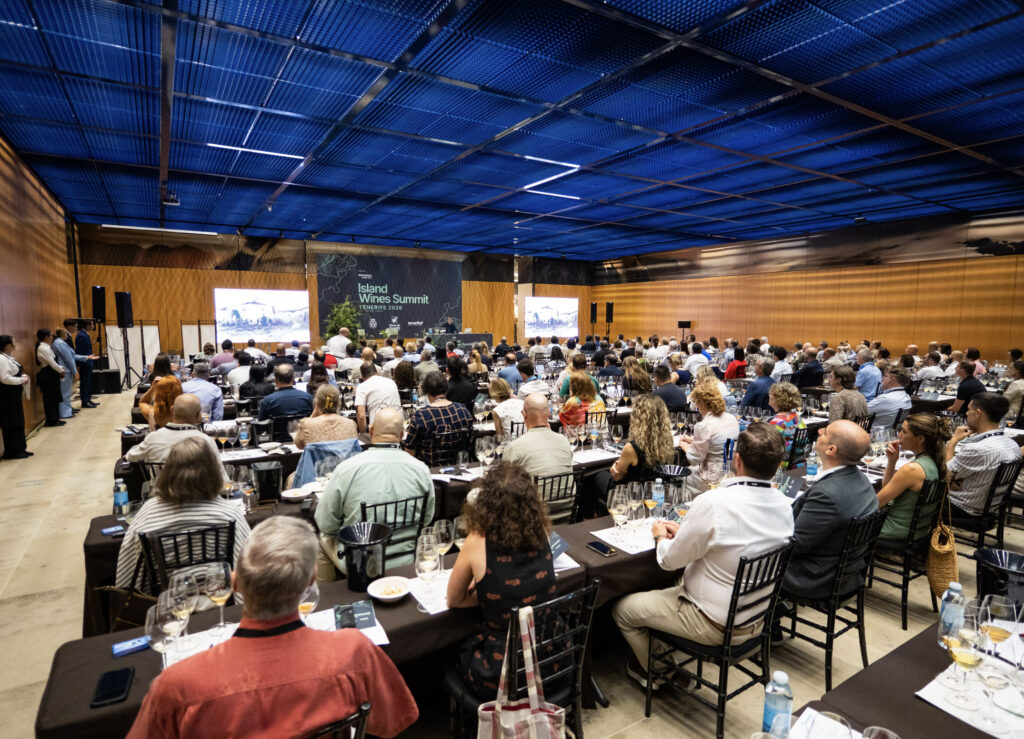
The first edition of Island Wines Summit It closed this Tuesday in Tenerife after several days dedicated to analyzing the role of island wines within the international wine panorama. The meeting brought together sommeliers, winemakers and specialists from different island territories to discuss the common characteristics of these wines and the challenges that their production areas share.
Congress has focused on factors such as the influence of the ocean, volcanic soils, extreme climates, the adaptation of varieties and the relationship between wine, landscape and culture. More than a closed category, The meeting presented island wines as a community of territories with similar problems and opportunities.
During the closing, the counselor of the Cabildo of Tenerife, Valentín González, defended that wine is part of the island's identity and is linked to the territory, to landscape and culture. He also highlighted the work of winegrowers and winemakers, and pointed out that the congress was born with the intention of continuity.
For your part, the director of Vocento Gastronomy, Benjamin Wool, valued the support of the Cabildo of Tenerife and stressed the importance of generating community around wine and gastronomy. As explained, The project began to take shape two years ago and this first edition has served to verify the interest of the island territories in sharing experiences.
The last day replaced the presentations with direct contact with the vineyard and the wineries. The congressmen visited different parts of the island to learn first-hand about the work of Tenerife producers and the diversity of projects that coexist in the territory..
The program included visits to Altos de Trevejos Winery, Luck of the Marquis, The Loin, Viñátigo, Tajinaste, Tempus, Ferrera, The Site, Pago and Crater Lineage, among others. The route showed different ways of interpreting Tenerife through wine: from altitude and soils to local varieties, family tradition, innovation in the winery and experiences linked to wine tourism.
Before the tour, he Master of Wine Fernando Mora offered an introductory talk about the origin and uniqueness of Tenerife wines. Mora explained that the island must be understood based on two main factors: insularity and volcanism. He also highlighted the influence of Teide, climate diversity, temperature changes, winds and humidity differences between areas.
Mora also recalled the historical importance of the Tenerife vineyard, with vines over a hundred years old, ungrafted vines and traditional conduction systems such as braided cord. In his speech he defined Tenerife as a kind of “Jurassic of viticulture”, for the conservation of viticultural practices and landscapes that are unusual in other territories.
The Tenerife winemaker Pablo Lopez, of The Site, summed up that idea by remembering that “wine is not where it is made.”, but where the grapes come from”. The phrase served to reinforce one of the central ideas of the meeting: the need to know the territory to really understand its wines.
La jornada también contó con la visión de Roberto Santana, of You envy, who argued that a wine region is consolidated when there are different interpretations of the same territory. In your opinion, That plurality is one of the keys that is helping the Canary Islands to gain presence and recognition.
Island Wines Summit thus concludes its first edition with a defined message: Island wines have sufficient arguments to compete in the international market, as long as they know how to rely on their authenticity, in the quality of work in the vineyard and winery, and in the ability to explain territories that do not look like others.

