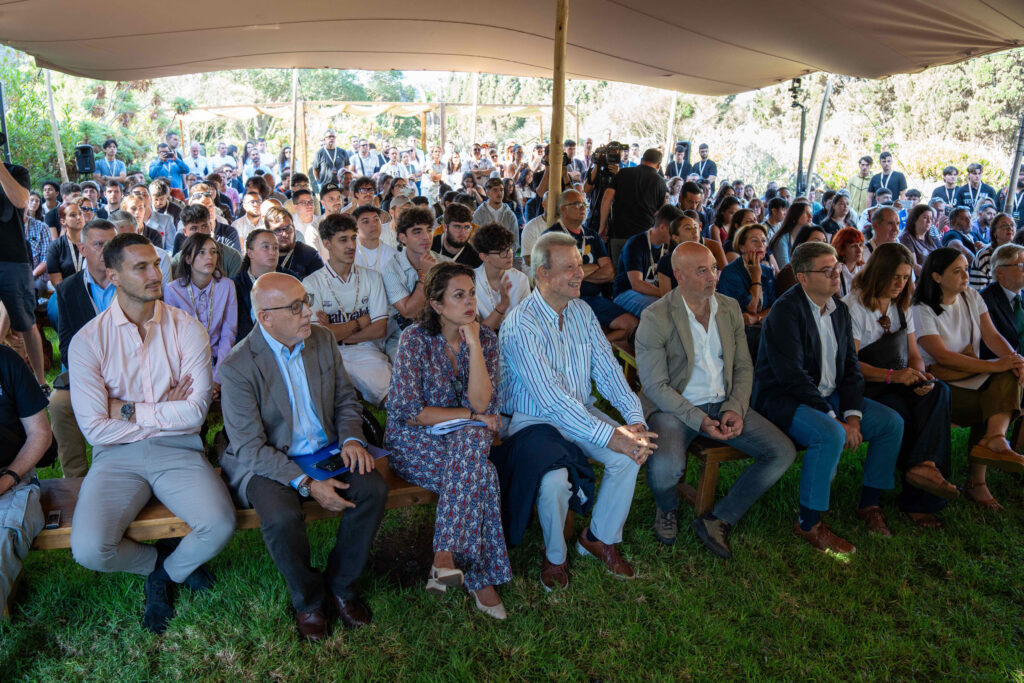
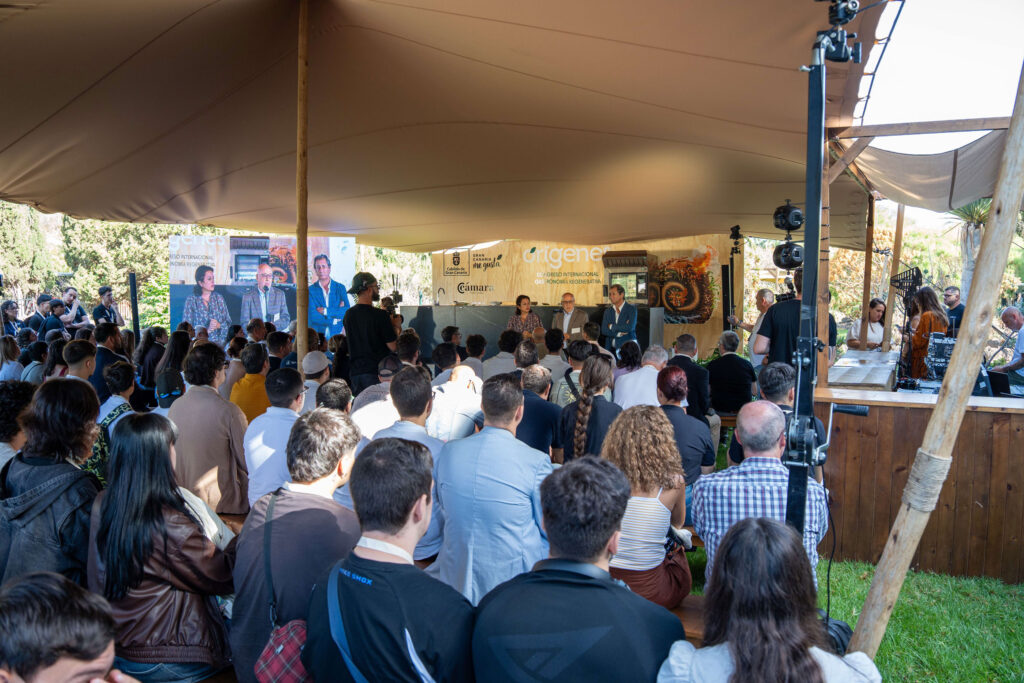
The ninth edition of Origins Gran Canaria began this Monday at the Viera y Clavijo Canary Botanical Garden with a first day dedicated to a question that increasingly occupies more space in gastronomy: What relationship should cuisine maintain with the territory that feeds it?.
The concept chosen this year is regenerative gastronomy, understood not only as a reduction of environmental impact, but as the possibility that restaurants, producers and professionals also contribute to conserving landscapes, biodiversity, traditional crops and knowledge.
Cooking from the roots
The program started with the Gran Canaria Carmelo Florido, from The Equilibrist 33, y Vicky Seville, of Roots, sharing the stage under the title Roots cuisine.
Both addressed the same issue from different territories.: how to resort to culinary memory, the local product and local identity without giving up contemporary cuisine.
One of the most unique contents came from the wild botany specialist Juan Carlos Roldan, that raised the gastronomic possibilities of species that grow spontaneously in the territory.
Roldán gave as an example the sweet tabaiba sap and its possible use in milk curdling, in addition to the necks —Silene vulgaris— which he found growing in a vineyard in Gran Canaria and which in areas like Jaén have a traditional gastronomic use.
From rural memory to sommelier
The day continued with Sleep Lamo, from Arrea!, which focused its intervention on the recovery of knowledge and ways of cooking linked to rural and mountain areas.
After, The focus shifted from the kitchen to the living room with Juan Diego Sandoval, Shell, while Diego Tornel and Rafael Berenguel, the Beaver, they tackled the sommelier.
The closing of the presentations corresponded to Rodrigo de la Calle, from The Greenhouse, who brought his work around gastrobotany to the congress with a speech dedicated to the relationship between science, biodiversity and plant cuisine.
The activity continued later in the Gastro Zone of the Garden of the Islands, conceived as a meeting point between professionals, producers and assistants.