


|
Listen to this article now
Getting your Trinity Audio player ready...
|
Borja Marrero's visit to Palacio Ico brought together the cuisines of Tejeda and Lanzarote in a menu shared with Víctor Valverde, between territory and emotion
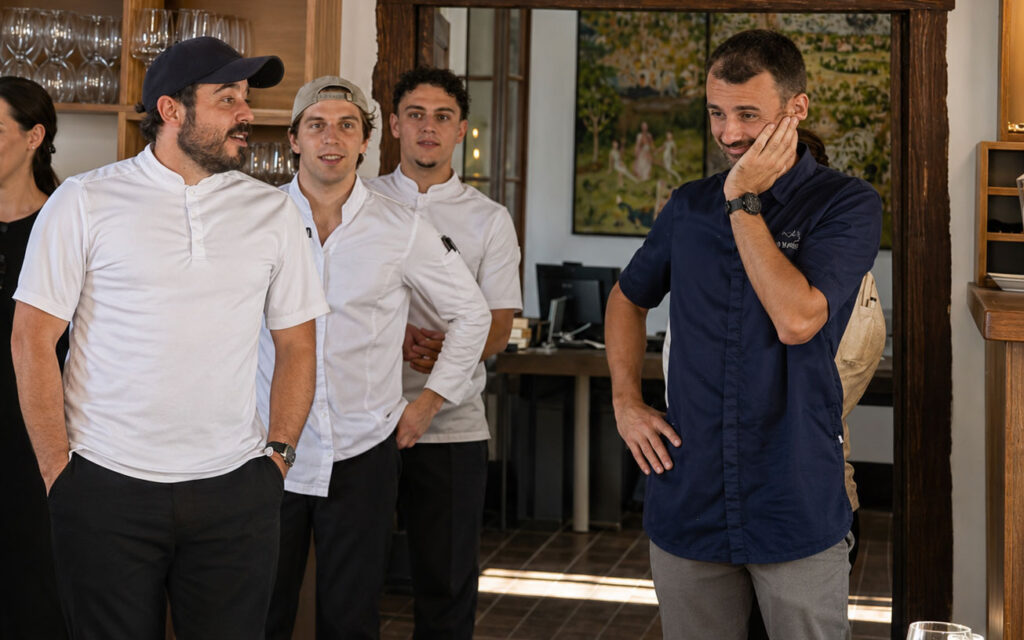
A pine bark from the peaks of Gran Canaria and a shrimp from La Santa may seem like ingredients from very distant gastronomic universes.. However, both found accommodation at the same table this Saturday, 14 of November, during a new edition of stars & Terroir, the project that develops Ico Palace in the town of Teguise. The meeting brought together Borja Marrero, head of Muxgo, y Victor Valverde, responsible for the kitchen of the host establishment. Two chefs with different personalities, but united by a conviction that helps explain much of the best contemporary gastronomy: before transforming a product, It is important to understand where it comes from and what it represents.
The title of this chronicle, Sense and sensitivity, It is not intended to be a simple literary wink. Summarizes two concepts that allow us to interpret Marrero's proposal and his meeting with Valverde.. The meaning of a cuisine that finds its reason for being in the territory, in memory and respect for resources. And the sensitivity necessary to transfer all that knowledge to the plate without turning it into an exhibition of virtuosity..
Borja Marrero has been developing that philosophy for some time at Muxgo, the restaurant that has made Tejeda, its landscapes and its agricultural and livestock resources the center of a project distinguished with a Michelin star and a green star. Their cuisine is not limited to using Canarian products.; part of a much closer relationship with them. Cultivar, to create, gather, preparing and cooking are part of the same process that involves both personal commitment and gastronomic research..
The dialogue held in the courtyard of Palacio Ico allowed us to get closer to that way of understanding the job. Marrero represents a kitchen with discourse, but whose greatest virtue is that this discourse finally finds an edible translation.
The meaning of cooking a territory
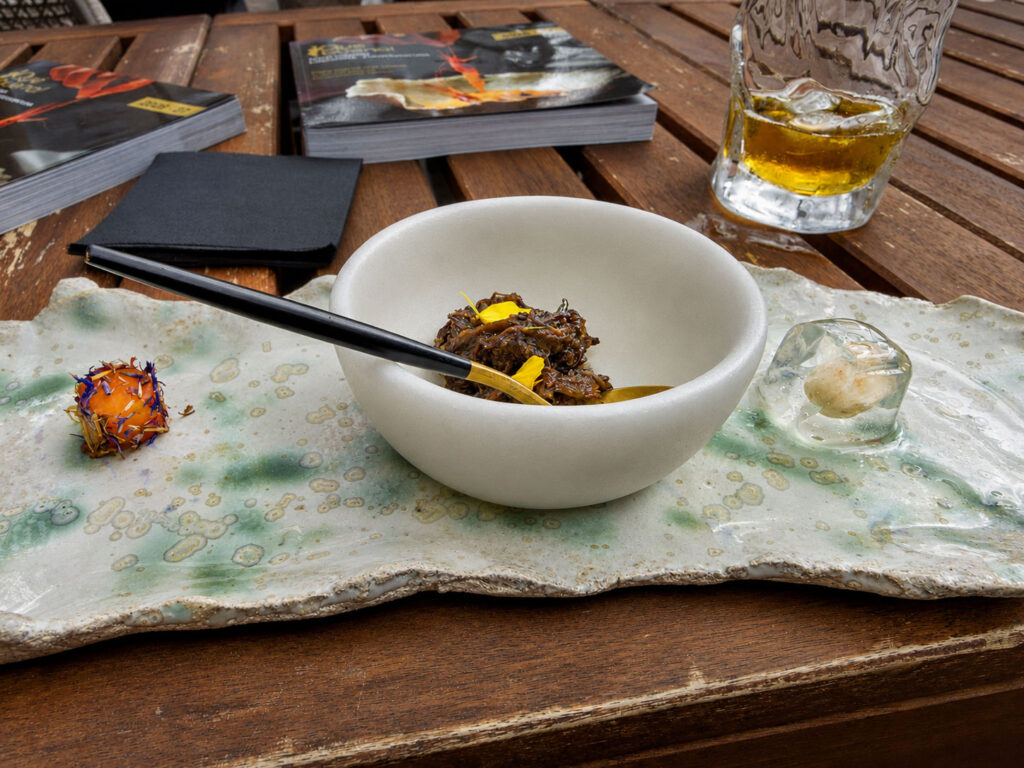
The first bites were a declaration of intentions. almond water, Sweet Pickled Pumpkin and Goat Stew. Three preparations that summarized different expressions of the culinary universe of Muxgo: the agriculture of the midlands, the use of own resources and the recovery of meat deeply linked to the food history of the Canary Islands.
One of Marrero's teachings: the truly unique can be found in products that have always been close, although for too long they were not given the gastronomic attention they deserved.
The shared menu started with a salted tres leches curd and pine bark sauce, probably one of the preparations that best expresses the thoughts of the Gran Canarian chef. The forest enters the kitchen as part of the identity of the dish. The milk, cheese making and pine speak of a precise territory, recognizable, which Marrero has turned into his main source of inspiration.
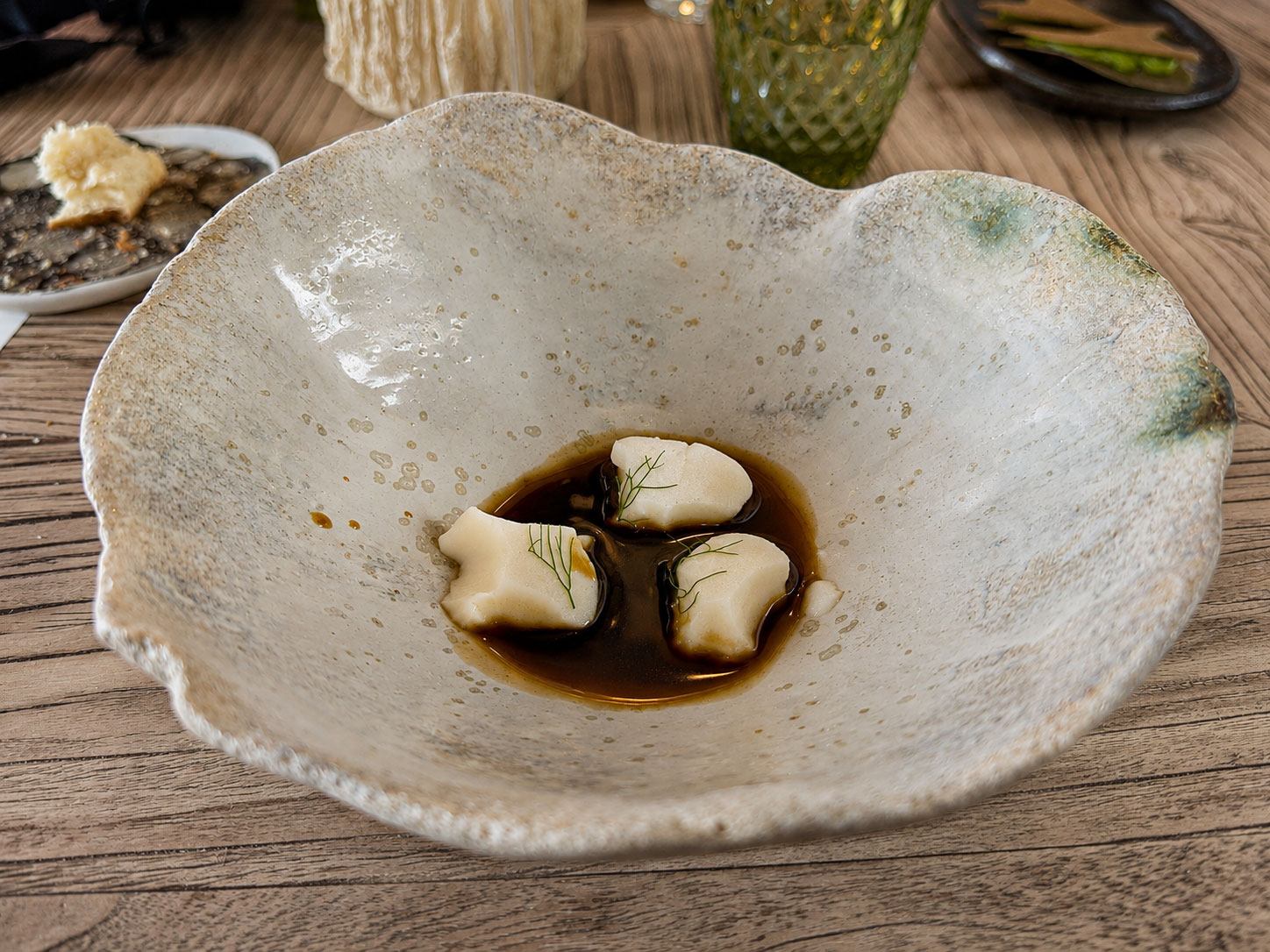
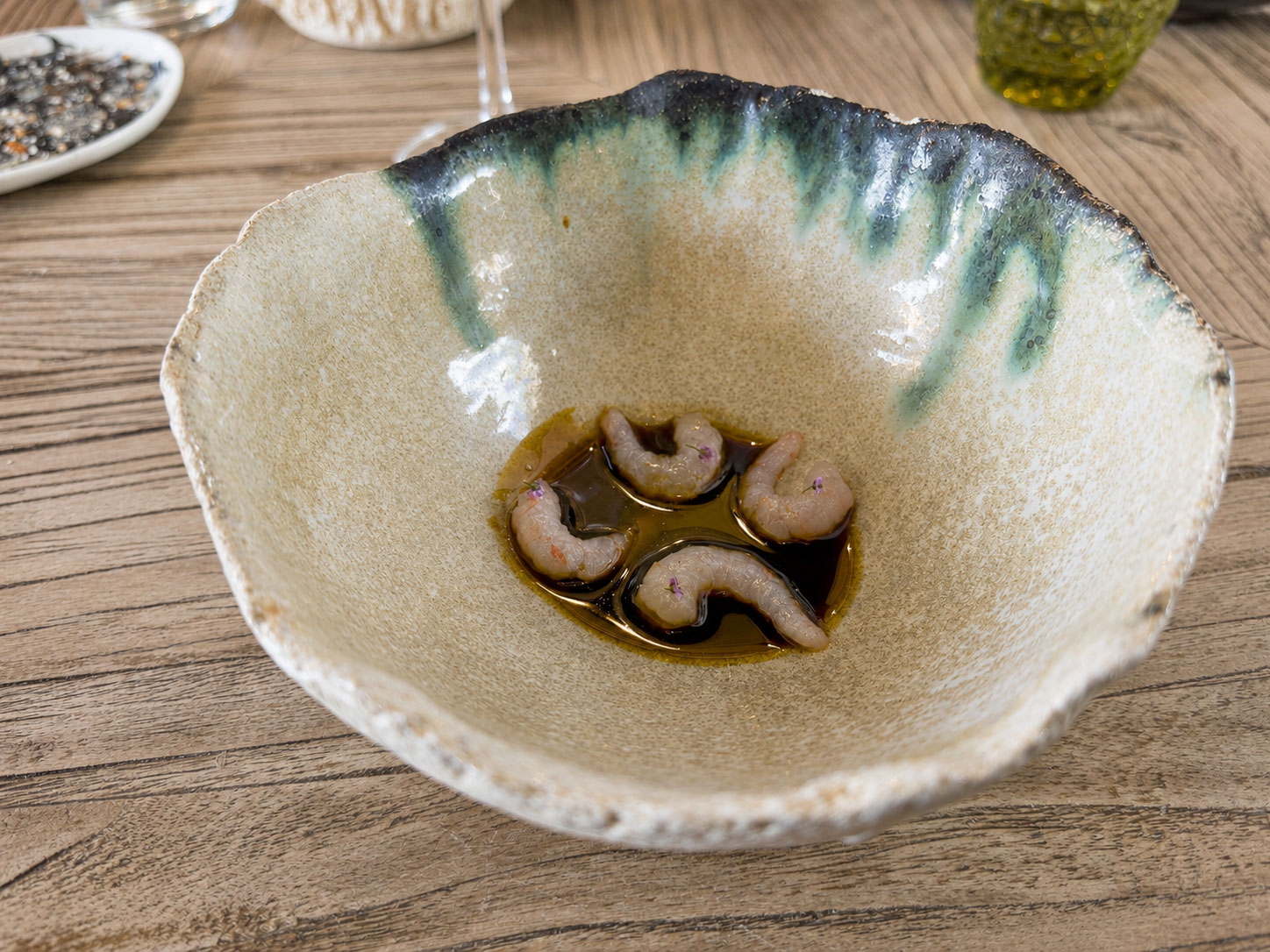
The following proposal transferred this approach to Lanzarote. Prawn from La Santa with onion soup and citrus apple tartar. A product from the conejera island interpreted from an outsider's perspective, but respectful of its origin. This type of encounter reaches much of its true interest here.: discover what happens when a cook contemplates a raw material that does not belong to his usual environment and incorporates it into his own language.
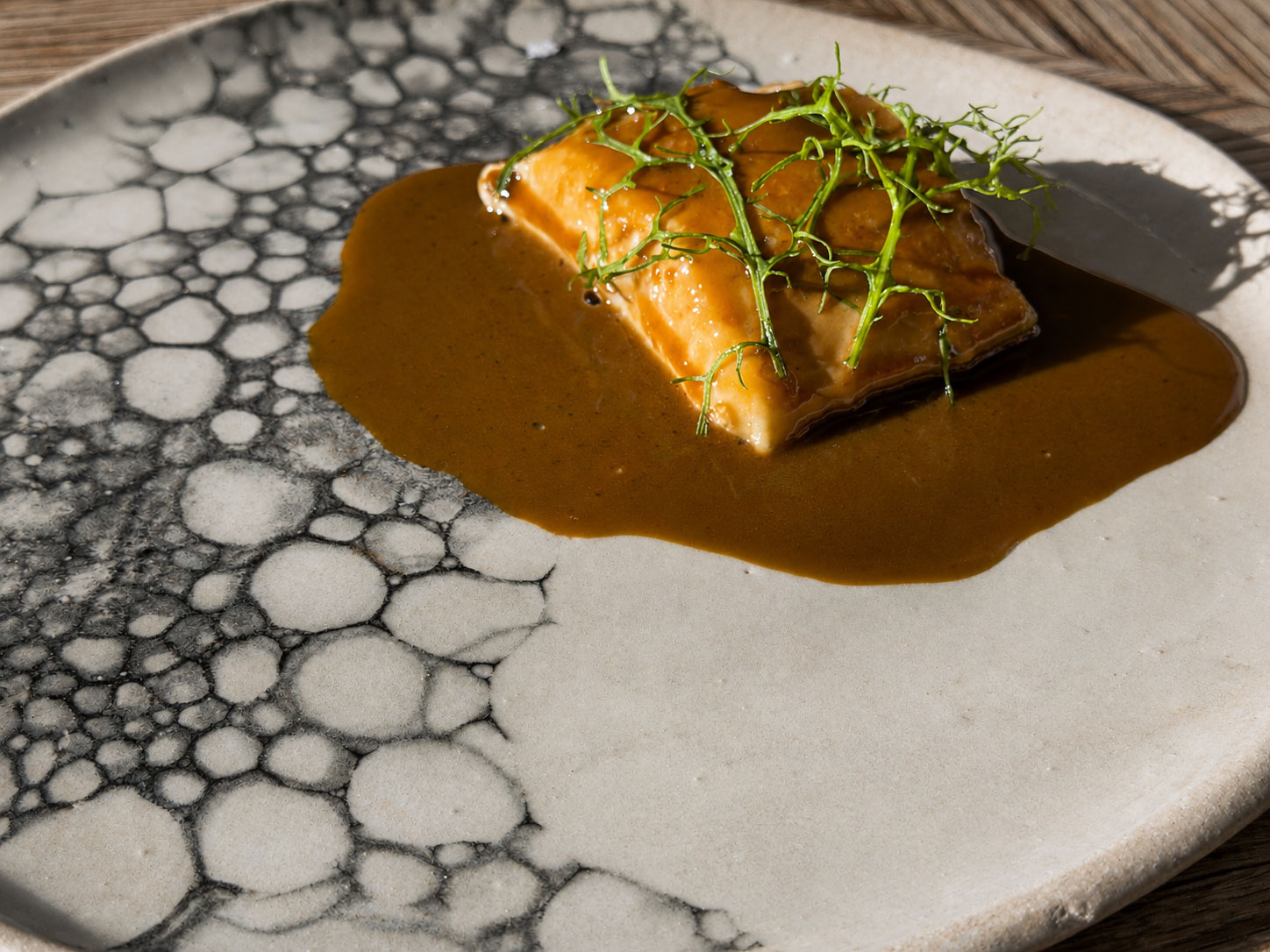
Marrero completed his participation in the savory menu with a Atlantic sea bass cooked in sheep fat and carabinero sauce. Sea and livestock in the same preparation, a combination that once again shows the extent to which his cuisine seeks relationships between the different resources of a territory.
The sensitivity of the recipient
But the day would not have had the same meaning without Victor Valverde. The Palacio Ico chef was not satisfied with serving as the guest's companion. As is usual in these meetings, prepared specific elaborations that offered complementary reading and, in some moments, deliberately different.
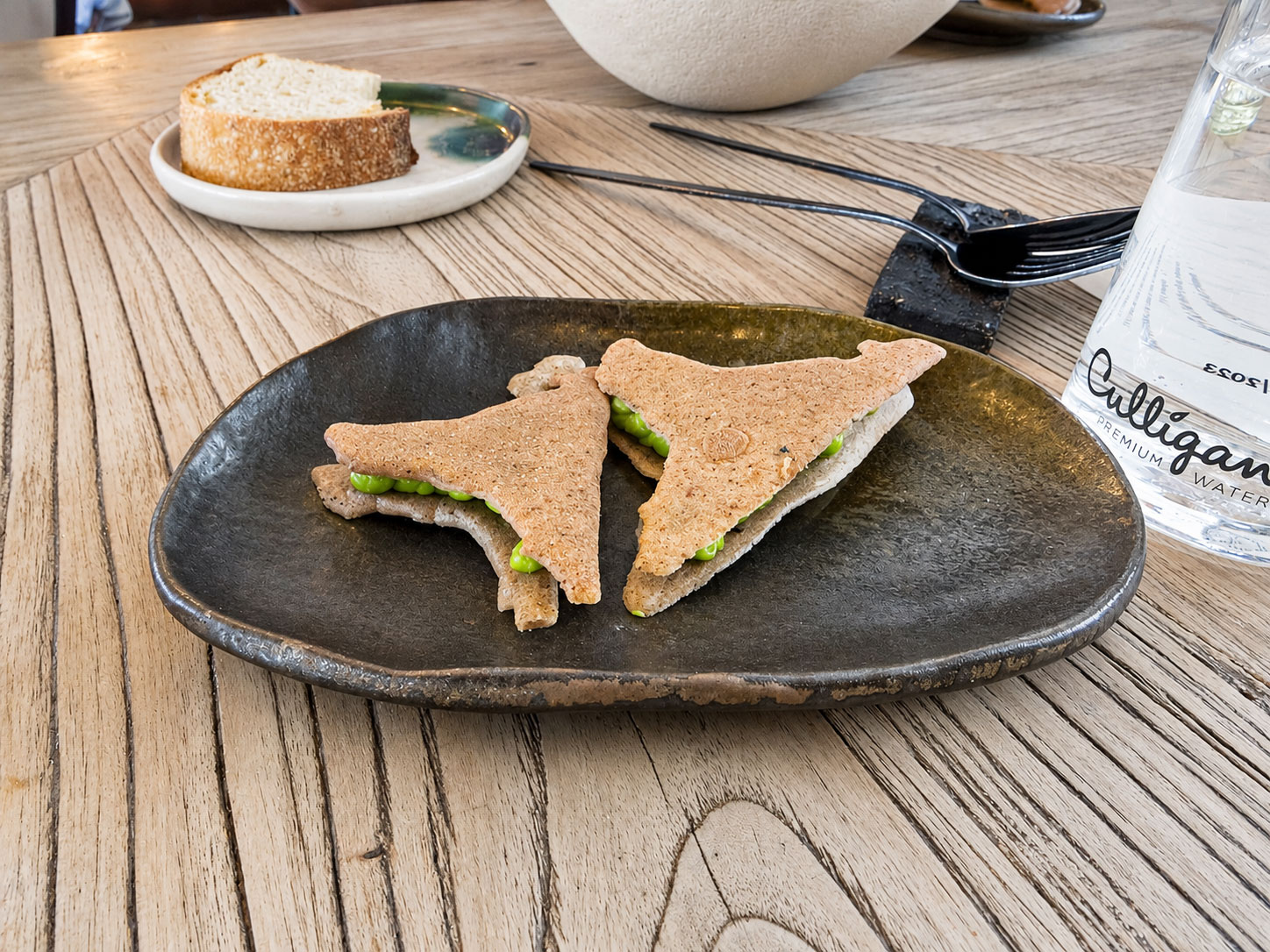
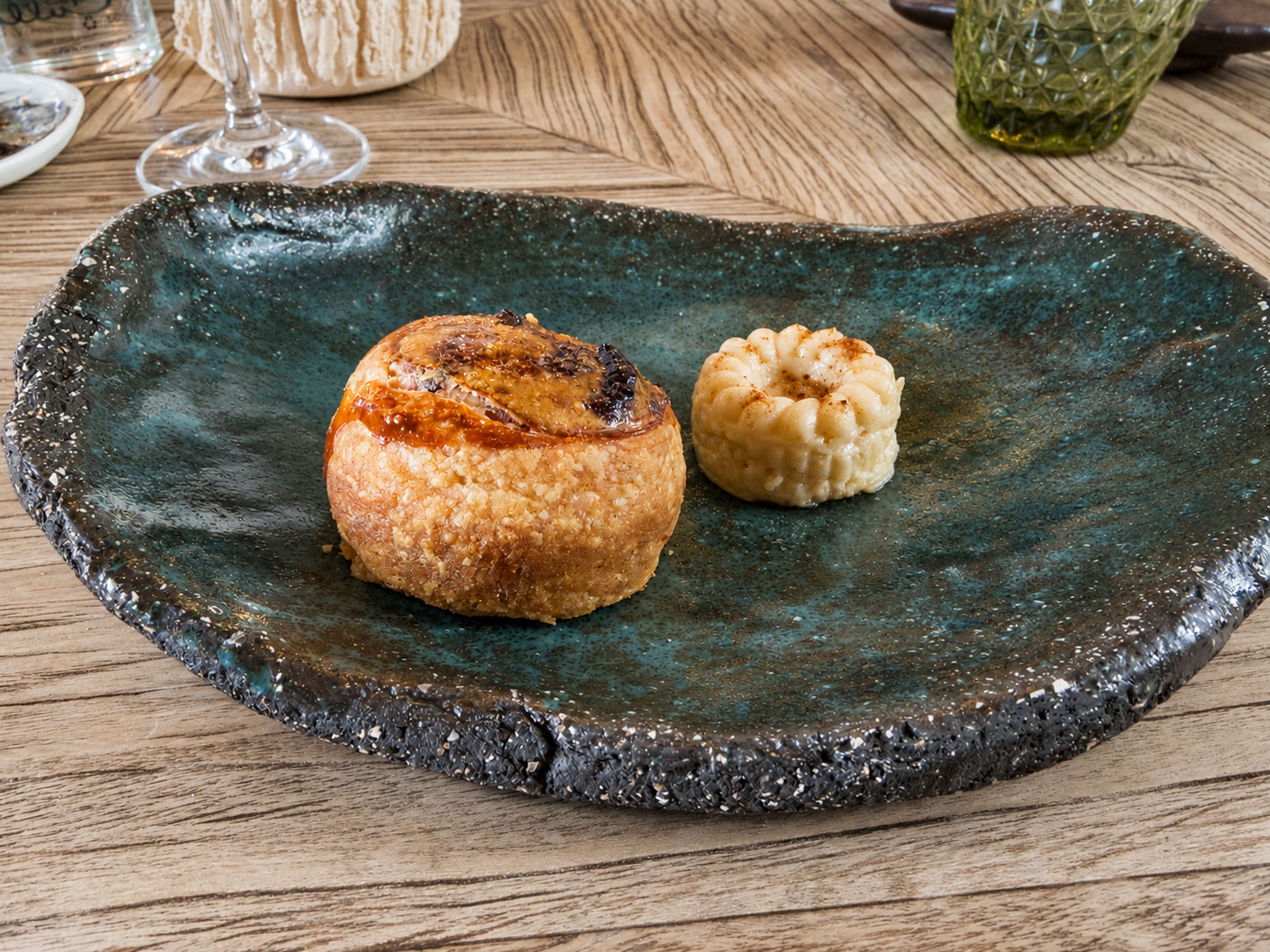
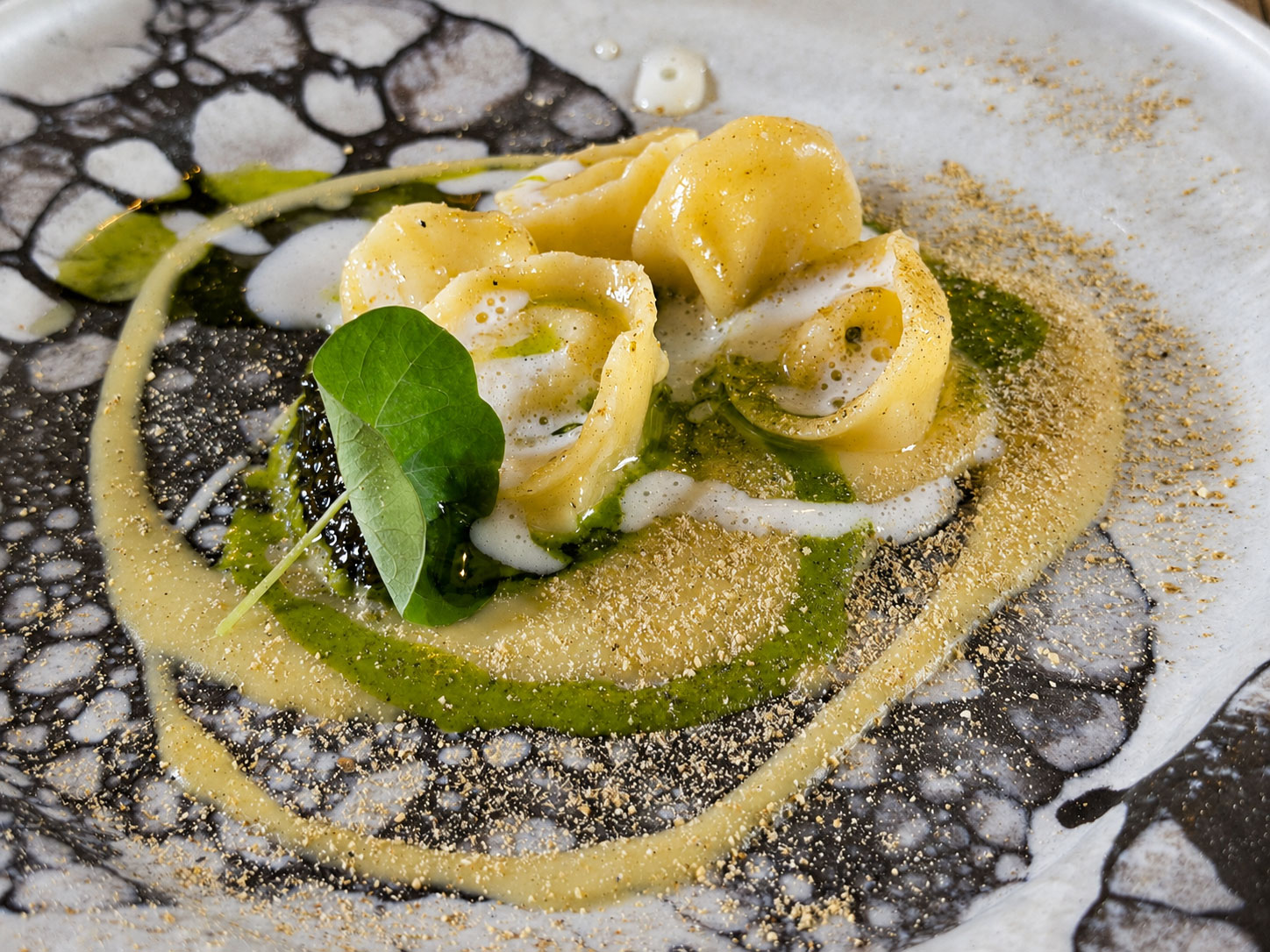
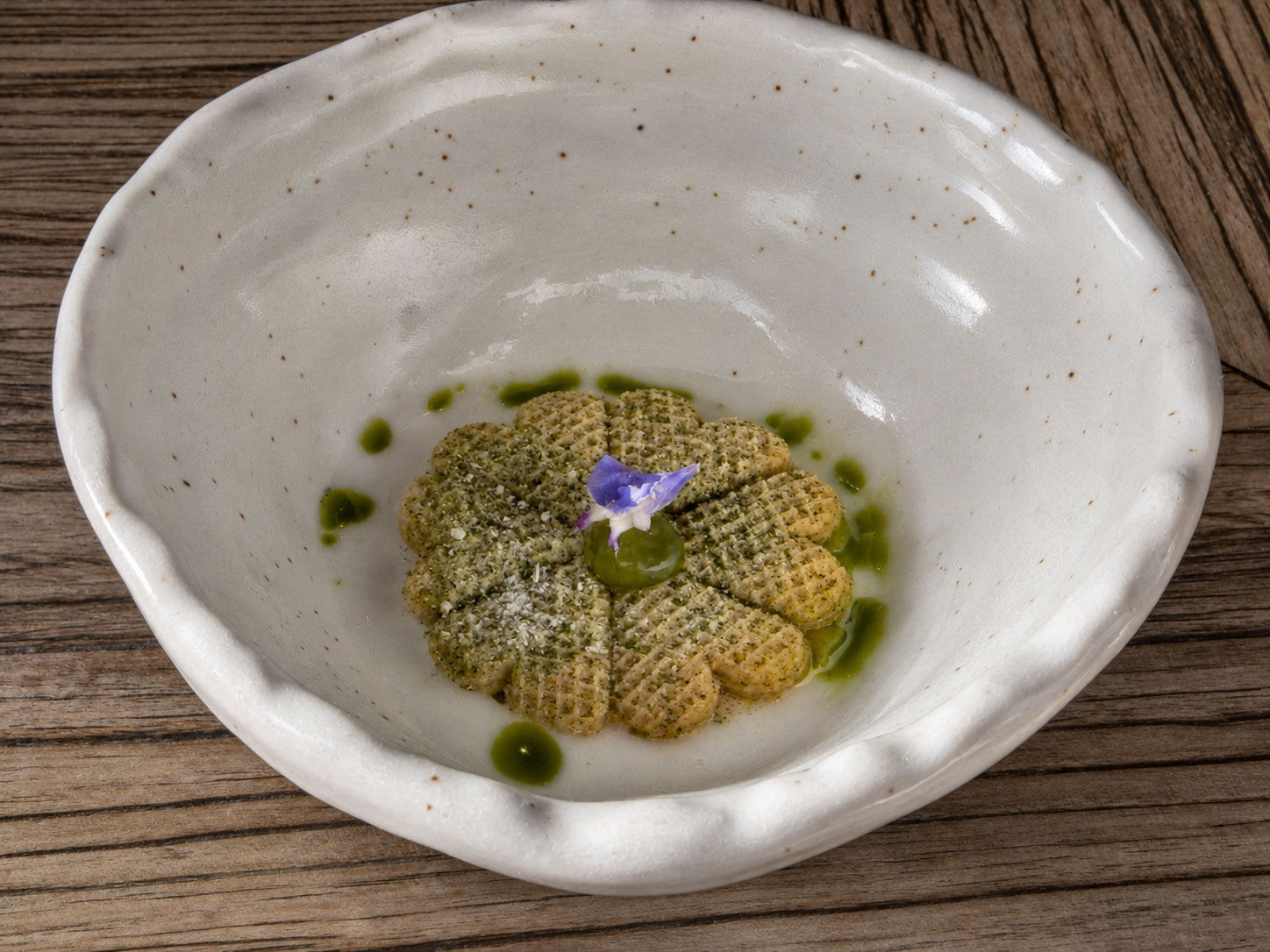
They are puff pastry with miso butter and citrus y, especially, the pasta inspired by southern Italy with Don Nicolás cheese, millet and goat's milk, They showed a cuisine that does not give up incorporating references from other traditions to work with Canarian ingredients..
If the meaning of Marrero's cuisine lies largely in the close relationship between the landscape and the ingredient, Valverde's sensitivity is recognized in his ability to build encounters between products, culinary techniques and references.
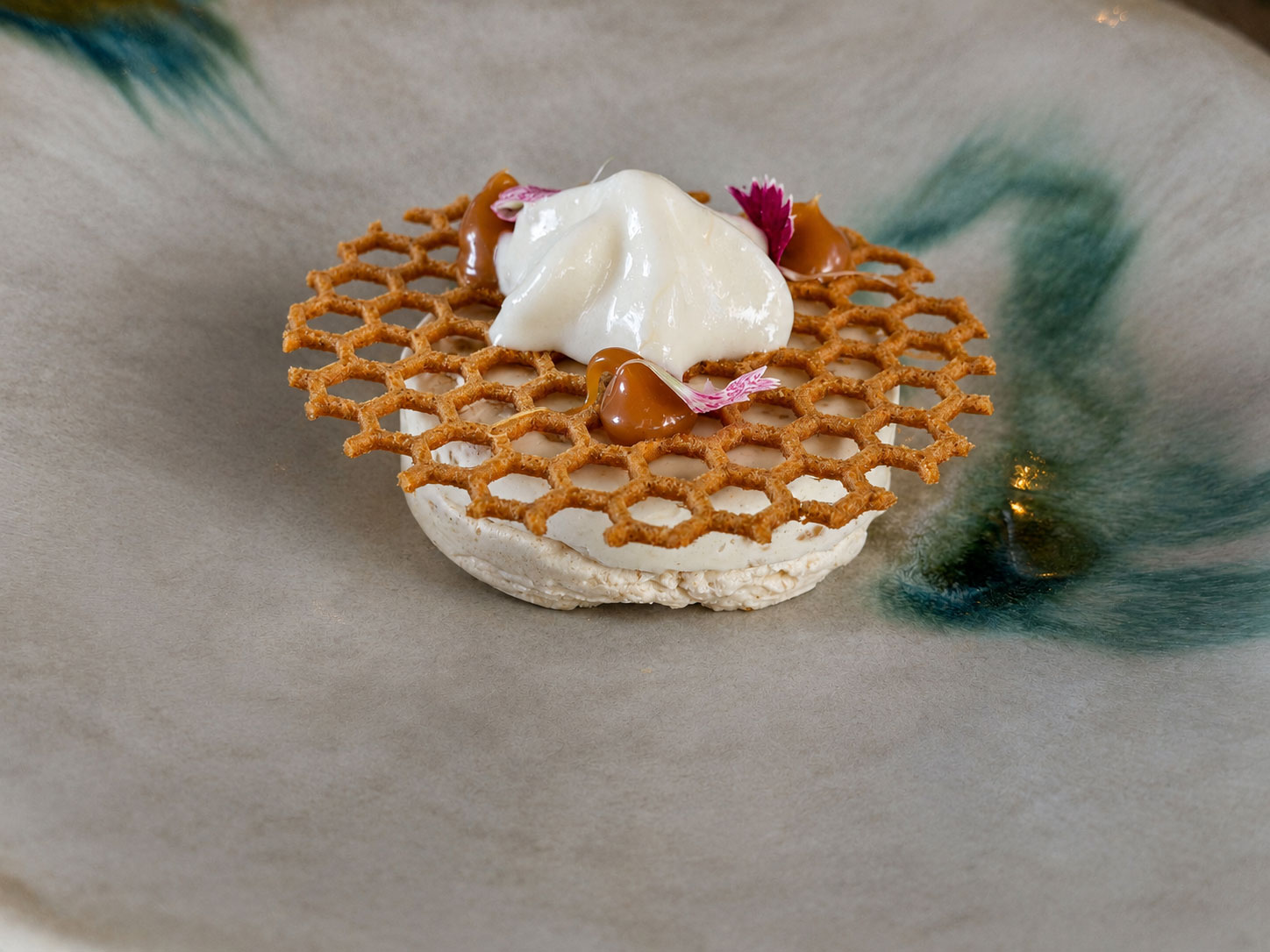
The sweet chapter was left in your hands. First, an elaboration dedicated to the fig tree, followed by a combination of almond, gofio and honey from La Palma. Y, as a last bit, and white sweet potato bonbon.
The presence of the latter, one of the most characteristic agricultural products of Lanzarote, He closed the tour with a reference to the island pantry. After traveling through the peaks of Tejeda, its cheeses and its pine forests, the menu returned to the island's crops.
Four wines, four ways to understand the landscape
The pairing prolonged this dialogue between territories in the glasses, con four wines from different origins and approaches. A selection that allowed the same reflection that had presided over the gastronomic meeting to be transferred to the oenological field.: The identity of a product does not reside solely in its raw material, but also in the landscape, the tradition and the decisions of those who make it.
The tour included Caberrubia, from Bodegas Luis Pérez, a fine from Carrascal's payment, in Jerez, made with unheaded fine palomino and raised under a flower veil. A wine that recovers a way of understanding Jerez production in which the origin of the grape and the character of the vineyard take on a special role..
From Andalusia, the team returned to the Atlantic with Braided, from Luck of the Marquis, one of the wines that best represents the particular viticulture of the La Orotava Valley. Made mainly with white ribbon, Its name refers to the traditional braided cord vine conduction system., that has shaped the agricultural landscape of the north of Tenerife for generations. An expression of how inherited technique and territory can remain closely united in one bottle.
Lanzarote was represented by Frías, by David Fernandez, a white listán white born from old vines cultivated in traditional holes on the volcanic landscape that extends between the Montaña del Alto and Tizalaya. His presence had a special meaning in Palacio Ico: It allowed us to incorporate into the pairing the work of a new generation of winegrowers who seek to interpret the particularities of each plot without giving up traditional forms of cultivation..
Completed the selection The Listán Blanco Estates, from Finca Vegas, made with grapes from vineyards in the south of Tenerife, in the Abona Designation of Origin. A white that comes from plots located at different altitudes and whose production process combines fermentation in stainless steel and wood with aging on lees..
Four wines - and one grape in common, blank on the list- that they did not intend to tell the same story. Precisely therein lay the interest of the selection. Jerez organic aging, the braided cord of northern Tenerife, the volcanic holes of Lanzarote and the high altitude vineyards of southern Tenerife They showed different ways of relating to the land and transforming its fruits..
Because wine also needs meaning and sensitivity. Sense to understand varieties, the soils and the work of those who cultivate the vineyard. Sensitivity to interpret that heritage and find its place on the table without the preparation losing its personality.
Much more than seating two cooks
It is also worth stopping at the meaning of stars & Terroir, an initiative promoted by Sonsoles López and Eduardo Riestra, owners of Palacio Ico.
Its main merit does not lie solely in bringing chefs distinguished by the great gastronomic guides.. It is to do it with a format that allows you to listen to your ideas, learn about their products and then sit at the table to see how they translate into specific preparations. Conversation and food are part of the same cultural experience.
Canarian gastronomy needs spaces where its professionals can show their respective ways of understanding cuisine without one having to impose itself on the other.. And it also needs the public to understand that behind certain dishes there is something more than a refined technique or a lucky combination of flavors..
In Ico Palace, Borja Marrero contributed the universe of Muxgo, built from an extraordinarily close relationship with its territory. Víctor Valverde responded from his own kitchen, making room for products from Lanzarote and interpretations that expanded the gastronomic journey. The selection of wines completed this conversation between origins, trades and ways of understanding the product.
Meaning was at the origin of things, in knowing why what is cooked is cooked. The sensitivity, in the way to do it. Two concepts that, when they find balance, They help explain why gastronomy can become a much deeper cultural expression than the mere pleasure of eating..

