


|
Listen to this article now
Getting your Trinity Audio player ready...
|
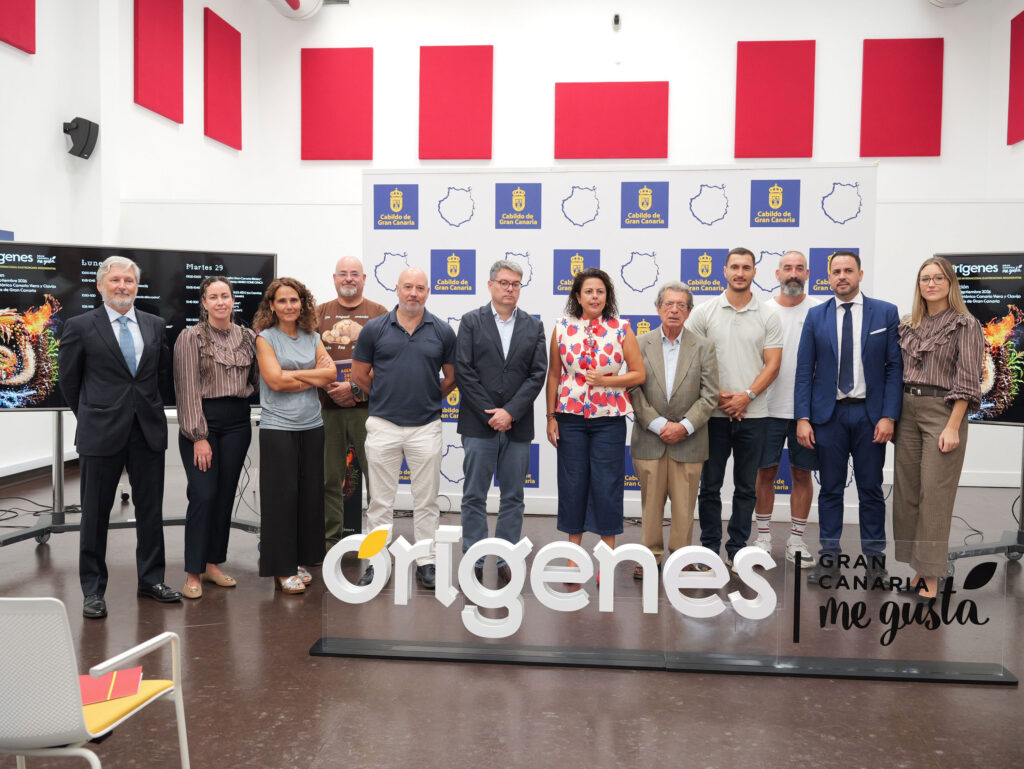
Orígenes Gran Canaria brings together 24 professionals the days 28 y 29 September with regenerative gastronomy as the focus of its ninth edition
Regenerative gastronomy will be the common thread of the ninth edition of Origins Gran Canaria, that will be celebrated on days 28 y 29 September at the Viera y Clavijo Canary Botanical Garden.
This time the congress proposes to expand the gastronomic conversation beyond what happens in a kitchen. Territory recovery, biodiversity, local product, traditional trades, hospitality, wine and rural economic activity will be part of a program that will bring together professionals from the Canary Islands and other parts of Spain.
In total they will participate 24 professionals, which add up to approximately fifteen Michelin Stars and twenty Repsol Suns. The two days will combine presentations and conversations with a Gastro Zone in which producers and companies will be present.
Chefs working from the territory
Among the invited names is Rodrigo de la Calle, of the El Invernadero restaurant and one of the main disseminators of gastrobotany in Spain.
Next to him will be Javier Olleros, by Culler de Pau; Sleep Lamo, from Arrea!; Vicky Seville, of Roots; Christopher Muñoz, of Ambivium; y Christmas Baz, by Garena. The representation of Gran Canaria will have, among others, con Borja Marrero, by Muxgo; Carmelo Florido, from The Equilibrist 33; y Carlos Padilla, by La Dorotea.
The approach also seeks to encourage cross-talk between guests and professionals on the island.. Vicky Sevilla and Carmelo Florido will share the intervention, like Cristóbal Muñoz and Borja Marrero.
Carlos Padilla will participate alongside Mario Eats Oaxaca in a session dedicated to food going back and forth between Gran Canaria and Mexico, thus introducing another of the issues that cross the island gastronomy: the historical influences and products that have traveled between both sides of the Atlantic.
The room also demands prominence
One of the differences of this edition will be the greater space reserved for professions that often remain in the background when gastronomy is publicly discussed..
The room, hospitality and sommelier will have their own voice with professionals such as Juan Diego Sandoval, Shell; Sara Fort, Manager of Paco Roncero Restaurant; Diego Tornel, the Beaver; Mari Pino Pérez, from Los Guayres; y Angela Pena, by Haydée.
The wine and the vineyard will also appear from a perspective closely linked to the landscape. Francisco Barona, Iñaki Garrido, Sandra Armas and Carmelo Peña will participate in a meeting dedicated to the recovery of historic vineyards, traditional varieties, high altitude viticulture and land conservation.
There will also be space for plant heritage and crafts. The herbalist Juan Carlos Roldan will talk about wild plants, while La Cremita Obrador y Sourdough Masa Madre Natural will address the relationship between bread and territory.
What does it mean to regenerate from gastronomy??
The expression regenerative gastronomy It will be the concept around which a good part of the meeting will revolve.
The proposal is based on a simple but broad idea: that gastronomy is not limited to taking advantage of the resources of a territory, but can also contribute to preserving them, recover practices and knowledge, maintain economic activity in rural areas and protect certain productive landscapes.
The congress takes as its starting point precisely the particularities of Gran Canaria—microclimates, altitudes, biodiversity, agriculture and gastronomic heritage—to discuss how cuisine can relate to that environment without separating itself from those who produce the food.
The choice of the Viera y Clavijo Canary Botanical Garden as the setting also responds to this intention of connecting professional conversations with the landscape..
Future professionals also enter the debate
Orígenes will have a significant presence of students this year. The organization foresees the assistance of around 200 students per day from twelve Vocational Training centers, fundamentally linked to hospitality and gastronomy.
The format aims to put them in direct contact not only with chefs, but also with producers, room professionals and companies, offering a somewhat broader vision of the sector they will join.
The congress will have a planned capacity of 350 daily people and will be hosted by the gastronomic journalist and presenter Veronica Zumalacárregui.
After nine editions, Orígenes thus seeks to shift part of the focus of the dish towards everything that makes it possible.: the product, the landscape, the trades, the room, the wine and the people who keep the territory alive.

