


|
Listen to this article now
Getting your Trinity Audio player ready...
|
The harvest of the Canary Islands DOP began in Fuerteventura with volcanic malvasia, muscatel and black list for Bodega Gavias El Sordo
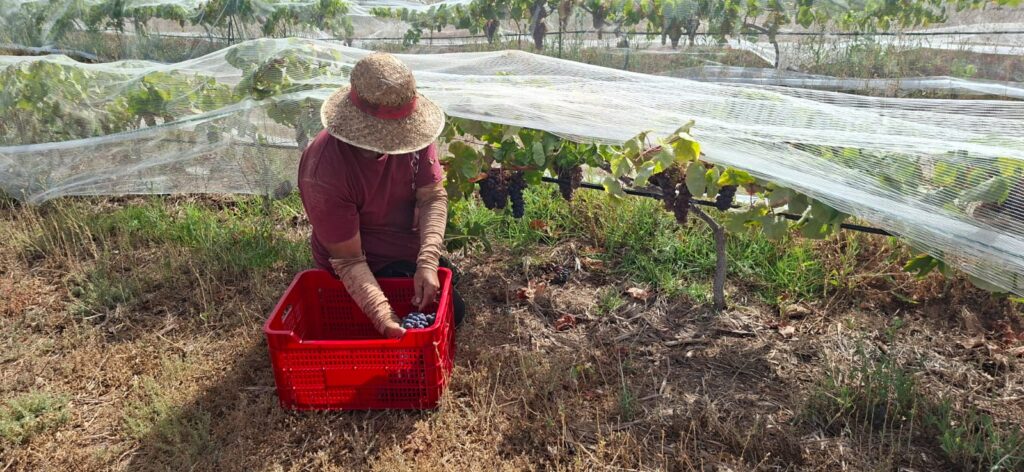
The vintage of the DOP Canary Islands – Canary Wine is already underway. The campaign started last Thursday, 16 of July, in the El Sordo Estate, located in More, Fuerteventura, where the first grapes destined for the production of Gavias El Sordo Winery.
The beginning once again places the Canarian vineyard among the earliest in the northern hemisphere, a condition that speaks of climate, latitude and agricultural uniqueness, but also of a viticulture that coexists with very specific limitations. On this first day they were harvested Volcanic Malvasia, Moscatel and Listán Negro in farms marked by water scarcity, one of the great determining factors of the Majorero field and, by extension, of a good part of the island's agricultural landscape.
The collection will be extended over the coming weeks to the entire archipelago.. According to the estimates of the Regulatory Council, the campaign of 2026 points to a notable increase in the volume of grapes compared to the harvest of 2025, a relevant fact for a denomination that has been consolidating its weight within the Canarian wine sector.
After fifteen years of experience, Canary Wine has established itself as the designation of origin with the greatest implementation in the Canary Islands. It has almost 1.000 active winegrowers and more than 50 attached wineries, many of them export-oriented. Added to this productive muscle is a growing participation in R&D&I projects and a continued growth trend that the DOP itself points out as one of its differentiating features within the map of wine on the islands..
The start of the harvest is not just an agricultural date. It marks the beginning of a decisive cycle for wineries, winegrowers and territories that have made the vineyard a form of identity. In the Canary Islands, That identity is based on native varieties, volcanic soils, early harvests, difficult plots and a way of making that gains presence inside and outside the archipelago.
The campaign 2026 arrives, therefore, with expectations of greater volume and with the permanent challenge of protecting a unique wine heritage. In that tension between climate, water shortage, landscape and quality are at stake for a good part of the future of Canarian wine.

