


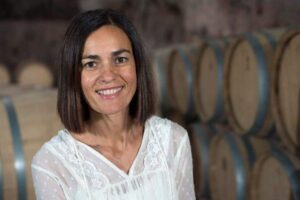
Sandra Armas Judge
President of the Gran Canaria Wine Route Association
Gran Canaria not only stands out for its impressive landscapes and unique biodiversity.. Its wine tradition delights the senses and, at the same time, plays a crucial role in achieving the Sustainable Development Goals (ODS) established in the Agenda 2030 of the United Nations and in the Ecoisla Gran Canaria Agenda 2030.
With a diverse climate and volcanic terrain, Our island has known how to take advantage of its natural conditions to make possible a wine production that, currently, responds to the parameters of sustainability. Let us remember that the Canary Islands are outside the optimal areas for vineyard cultivation.. This is possible because the winegrower has understood the vine and the environment in which he grows it..
The application of environmentally friendly agricultural practices, such as organic farming and the adoption of sustainable technologies, It has been and will be the cornerstone of island viticulture. These practices contribute directly to the SDG 15 (Life of Terrestrial Ecosystems), promoting biodiversity conservation and soil health. Besides, Efficient water management and the reduction of greenhouse gas emissions are fundamental goals that the Canarian wine industry addresses responsibly., aligning with the SDG 12 (Responsible Production and Consumption).
Gran Canaria, facing challenges related to climate change, has demonstrated a remarkable capacity for adaptation in viticulture. The implementation of resilient agricultural practices and the search for grape varieties adapted to specific conditions of the region are essential for long-term sustainability. This approach clearly contributes to the SDG 13 (Climate Action).
The promotion of sustainable tourism through the Wine Route
Wine production in Gran Canaria is not only an expression of the quality and diversity of the sector, but also a vital engine for the local economy. The wine industry generates employment in rural communities, supports small farmers and promotes sustainable economic development. This positive economic impact contributes directly to the SDG 8 (Decent Work and Economic Growth) y al ODS 10 (Reduction of inequalities).
In relation to the alignment with the SDGs, it is also worth mentioning the promotion of sustainable tourism through the Gran Canaria Wine Route, the only one certified nationally by ACEVIN and that has recently renewed its membership. Besides, supporting the diversity of native varieties, recognized worldwide and by experts such as Francesca Fort, and the preservation of traditional winemaking methods, strengthen cultural identity and social fabric.
From the Gran Canaria Wine Route and AIDER-Gran Canaria we have worked on a 'Guide to Good Energy and Water Practices' in wineries following the footsteps of the Gran Canaria Renovable Rural II project. The partners of the Wine Route have received advice for the development of an action plan aimed at better use and exploitation of water, light management, and the use of LED and waste materials (ODS 6, ODS 7, ODS 9 y ODS 13). They are not the majority yet, but the Gran Canaria wine tourism product already has establishments, bodegas, agribusiness and accommodation with uses of renewable energy.
At the national level, together with ACEVIN and the Spanish Wine Routes Product Club (RVE), We are working on a 'Guide to Good Sustainable Practices in Wine Tourism'. From 2023 The official products that we are under this brand have our own document. This is the 'Practical Guide to Sustainable Tourism Spanish Wine Routes', with the objectives and compatible actions in this matter. For this type of analysis and diagnosis, the association and its technical management team, collaborates with a Consultancy on Sustainable Tourism, Carmen Bengoechea & CIA, with whom indicators have been developed for the evaluation of the SDGs and their three dimensions.
Wine tourism is increasingly popular
Gran Canaria, as a renowned tourist destination, has successfully integrated wine production into its tourist offer, thus supporting the generation of responsible tourism, vital for sustainability and to democratize the wealth of tourist activity. Local wineries, in addition to its main task – wine production -, have become settings where visitors can immerse themselves in the rich wine culture, most of the time by the product makers themselves. The awareness and added value of the product are perceived by the visitor directly and clearly..
The tourist understands that buying a bottle of wine, paired with the excellent products of the primary sector is to contribute directly to the producing family (ODS 8, 10, 11,12 y 17). These spaces speak of history, of tradition, and reinterpret the cultivation of the vine after several centuries of development. wine tourism, increasingly popular, not only offers tourists unique sensory experiences, but also provides an opportunity to understand and appreciate the importance of this tradition.
Regarding the economic aspects, The vast majority of establishments rely on workers from the area, knowledgeable about the product and in many cases directly linked to production. A gender balance is maintained by betting on professionals and their knowledge. There is a high presence of women on the board: chairwoman, secretary and members representing sectors, so its presence is very nourished. Cooperation between members is enhanced, the valorization of the product of the primary sector and their quality (ODS 4,5,8 10).
Gran Canaria is more than its natural symbols and iconic places
Gran Canaria, facing challenges related to climate change, has demonstrated a remarkable capacity for adaptation in viticulture. The Gran Canaria Wine Plan is another important commitment where the wine tourism product of Gran Canaria benefits and is nourished.. This plan provides advice on the implementation of resilient agricultural practices., regenerative soil treatments and study of the behavior of twenty local vine varieties that operate on the Island, without counting on foreign vine varieties. It's about giving, as soon as possible, with the grape varieties that best adapt to the specific conditions of each ravine, slope and orientation, studies that are essential for long-term sustainability. This approach clearly contributes to the SDG 13 (Climate Action). On the one hand, contributes to expanding vine cultivation, given that Gran Canaria is the only island of the archipelago that presents new surface area in recent years of this cultivation. This rich varietal heritage makes the island's wine offering extensive., varied, diverse and exclusive due to limited production.
In summary, the contribution of the Gran Canaria Wine Route to the Ecoisla Gran Canaria Agenda 2030 transcends the field of oenology and even tourism, to become a pillar of sustainability, economic development and, if you allow me, to collective self-esteem and local pride. Transversal values such as teamwork, bet on multidisciplinary human teams for the development of actions, the cooperation of different sectors and fair representation in the association's board of directors, between public and private powers, They are realities that we have on the Gran Canaria Wine Route. Together we are opening our eyes to the reality of another Gran Canaria and demonstrating that the interior and rural areas are a “perfect marriage” for the sun and fabulous beaches..
Gran Canaria is more than its natural symbols and iconic places, Now it is also committed tourism that complements the activity of the primary sector and the commitment to a visitor who contributes to economic activity.. Wine and the wine experiences offered by the Gran Canaria Wine Route are the central axis of a responsible tourism product that is committed to the landscape that this crop generates on the island.. Making wine and bottling landscape is not just a motto, marks the spirit and good practices on which the Gran Canaria Wine Route is committed.

