


|
Listen to this article now
Getting your Trinity Audio player ready...
|
The fish, the product and environmental awareness mark a day of the Meeting of the Seas with chefs, scientists and fishermen in Tenerife
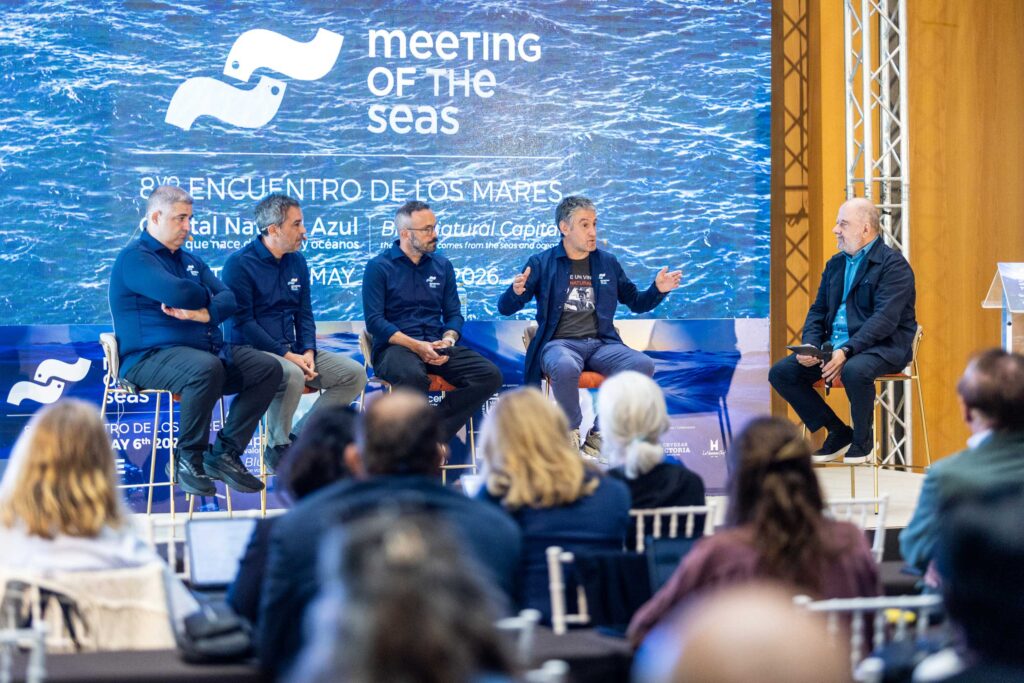
Tenerife has once again placed the sea at the center of the gastronomic conversation. The eighth edition of Meeting of the Seas, which is celebrated until 6 of May under the motto “Capital Natural Azul”, It brought together scientists on its first day, fishermen and chefs to address the future of the ocean from a shared perspective. But, between environmental data, economic reflection and calls for collective responsibility, gastronomy occupied a particularly relevant place: how to cook the sea, how to protect it and how to restore value to popular species that have been losing presence on the table.
The day left a clear idea: The marine cuisine of the future cannot be separated from the state of the ecosystems. The marine biologist Carlos Duarte warned of the accelerated deterioration of ocean life and defended the need to incorporate the value of nature into the economic system. As explained, since the years 70 has been lost 55% of the abundance of marine species, a figure that forces us to rethink the relationship between exploitation, conservation and feeding.
In that context, the kitchen appeared as a memory tool, consciousness and pleasure. The French chef Alexandre Couillon, in front of Marine & Vegetal, in Noirmoutier-en-l’Île, presented its iconic Ostra Erika, a dish born to remember the Erika oil tanker disaster in 1999. Submerged in a black squid ink broth that evokes pouring, the creation turns environmental denunciation into haute cuisine without losing emotion or flavor.
Also from the contemporary kitchen, Carlos de Medeiros, chef of Bar Amour, an Oslo, showed a Nordic dashi made with cod bones and heads, transformed into a clean and deep jelly. The proposal, accompanied by raw shrimp, oyster emulsion and elderflower vinegar, summarized a way of understanding the marine product from the use, the technique and the territory.
One of the most significant gastronomic debates revolved around the minor blue fish: sardine, mackerel and horse mackerel. humble species, tasty and of enormous nutritional value that, however, have been losing presence in homes. In Spain, per capita fish consumption has fallen by 50% and is located around the 22 kilos per person per year, a decline that especially affects these popular fish.
Come on bosses Josean Ali, Javier Olleros, Ivan Dominguez y Blazing Holly agreed on the need to restore culinary and cultural prestige to these species. Alija warned that they have stopped cooking at home and that young people are losing relationship with the product. Olleros defended that they should not be understood as substitutes for more noble fish, but rise from creativity. Domínguez claimed his role in an accessible and rooted cuisine, while Gorostiza insisted that what is not talked about ends up disappearing from consumption.
Marine haute cuisine also looked towards the shortage, seasonality and the real value of the product. Aitor Arregi, from Elkano and Cataria, defended a cuisine linked to the landscape: on a plate, said, a territory is shared, and that is why it must be defended. Pablo Sanchez, by Los Marinos José, recalled that demand many times exceeds product availability, which raises prices and forces adaptation. Berto Dominguez, by D'Berto, it was more direct: in the face of scarcity, your option is to buy less, maintain quality and educate the customer on the true value of the sea.
Congress also gave a voice to fishermen, with a table focused on concern about the lack of generational change. Roberto Rodríguez Prieto, Sebastián Martín Sánchez and Manuel Díaz agreed that the future of traditional fishing depends both on the sustainability of resources and the ability to attract new generations to a hard job., essential and increasingly threatened.
The first day was completed with the intervention of the two-time Olympic champion Theresa Zabell, Sartún Award 2026, who conveyed from his sporting experience a message of collective commitment to the protection of the ocean. Tribute was also paid to the underwater photographer Sergio Hunquet, died in Tenerife three months ago, with the delivery of the Sartún of Honor.
Meeting of the Seas thus reaffirms its role as a unique forum where science, fishing and cooking are heard at the same table. In Tenerife, the message was clear: Protecting the sea is not only an environmental emergency. It is also a cultural issue, economic and gastronomic. Because without living oceans there will be no product, nor marine cuisine, no memory to bring to the plate.

