


|
Listen to this article now
Getting your Trinity Audio player ready...
|
The Canary Islands have won nine gold and one silver in Città del Vino and have 40 wines to the Brazil Wine Challenge to reinforce its foreign projection
Canarian wines are going through one of their moments of greatest international projection. The Archipelago has just made an outstanding debut in the Città del Vino International Oenological Competition, celebrated in Italy, and participates for the first time in the Brazil Wine Challenge, one of the great wine events in South America, with forty references from the Islands.
The foreign presence of Canarian wine production has the support of the Government of the Canary Islands, through the Canarian Institute of Agri-Food Quality (ICCA) and the public company Management of the Rural Environment of the Canary Islands (GMR Canarias), in coordination with the Research Center, Study, Safeguard, Coordination and Valorization of Mountain Viticulture (DEER).
The first milestone occurred in the XXIV edition of City of Wine, whose final phase was held in Venice 29 al 31 of May. Over there, ten of the eleven participating Canarian wines were distinguished by the jury, with a balance of nine gold medals and one silver. An especially relevant result for a first participation in a contest that brought together more than 1.400 preparations from 12 countries.
Among the wines recognized with a gold medal are Payment of Los Cercados Tinto, from Bodega Emilio Tomás Palmero, e Hiboro, from Bodega Terruño de la Hijuela, both from the Tacoronte-Acentejo DOP, in the category of still dry reds. He also won gold Conatvs Pink, from Bodegas Conatvs, in calm dry rosés.
The medal table was completed with the golds of Pumuki Ancestral, from Bodegas Ventura, y Princess Fayna sparkling, from Bodegas Vega de Yuco, both in classic method white sparkling wines. In calm dry whites they were awarded On the, from Bodegas Conatvs; Eidan Blanco, from Bodegas Ventura; y Payment of Los Cercados Selection y Albillo Criollo Selection, from Bodega Emilio Tomás Palmero. The money went to Conatvs Slimy Black, from Bodegas Conatvs, in calm dry reds.
The Minister of Agriculture, Cattle raising, Fisheries and Food Sovereignty of the Government of the Canary Islands, Narvay Quintero, He highlighted that these recognitions reinforce “the prestige” of the wines of the Archipelago on the international scene and recognize the commitment of winegrowers., wineries and institutions for a production marked by quality, the territory and varietal uniqueness.
From Venice to Brazil: an external route for Canarian wine
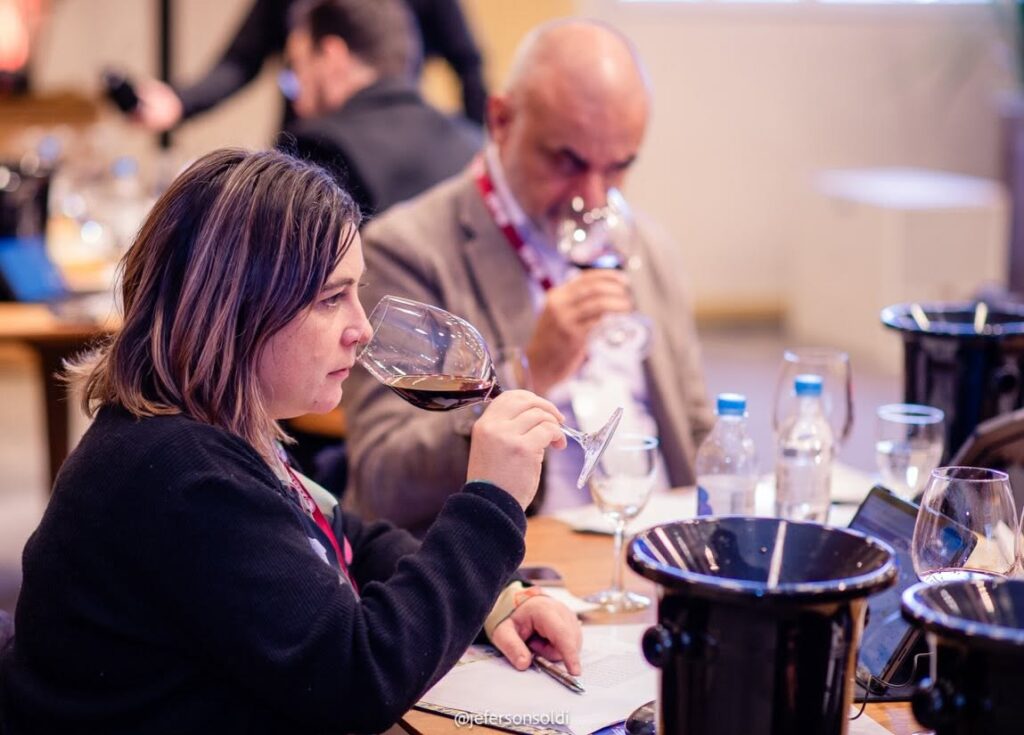
This same line of foreign promotion continues now in Brazil, where forty Canarian wines participate in the thirteenth edition of the Brazil Wine Challenge, which is celebrated from 16 al 19 June in Bento Gonçalves, in the state of Rio Grande do Sul. The contest brings together 1.127 samples of 190 Wineries of 19 countries and four continents, with blind tasting evaluations by an international jury made up of 89 specialists of nine nationalities.
The Canarian participation in Brazil It is not limited to the contest. The agenda includes two masterclasses aimed at sommeliers, importers, specialized press and prescribers of the American continent. Under the title "Canary Islands, Volcanic Territory, Unique Varieties”, The sessions are directed by the director of the Canary Islands Wine Station, José Luis González, and the vice president of CERVIM, Manuel Angel Capote.
The objective is to explain to international professionals what makes Canarian wine different.: volcanic soils, unique prephylloxeric varieties, cultivation systems linked to the landscape and viticulture that is part of the agrarian identity of the Islands. Besides, Meetings have been planned with importers and distributors in the region to promote the positioning of Canarian references in new foreign markets..
The Canary Islands thus arrive in Brazil after having proven their competitive strength in Italy. Two different scenarios, Europe and America, but the same strategy: place the wine of the Islands on the international map from what makes it unrepeatable, its volcanic origin, its varietal diversity and the agricultural memory that each bottle contains.

