


|
Listen to this article now
Getting your Trinity Audio player ready...
|
Five cheeses from the Canary Islands achieve four Golds and one Silver at the Cincho Cheese Awards, con 1.300 samples of 18 countries
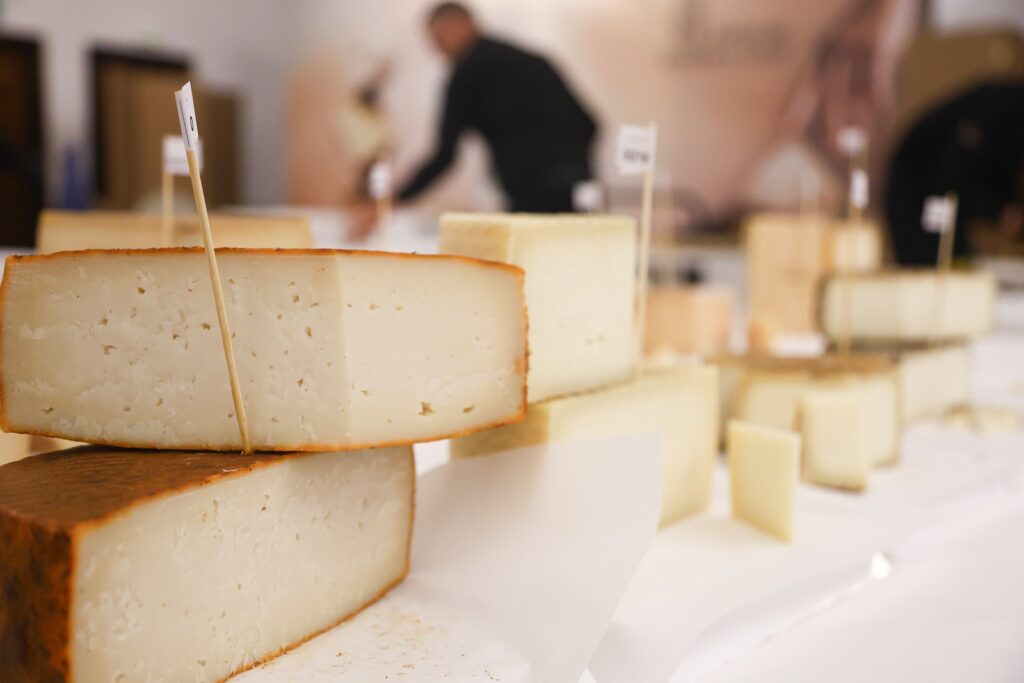
Canarian cheese once again demonstrates that its prestige is not based solely on tradition, but also in its ability to compete outside the islands. Five preparations from the Archipelago have been distinguished in the Cincho Cheese Awards 2026, one of the most important cheese competitions in Spain, whose final phase was held in Valladolid 2 al 4 of June, with the participation of 1.300 samples from 18 countries.
The Canary Islands record ends with four Gold Cinchos and one Silver Cincho, a result that confirms the solidity of a small-scale sector, but broad in personality. In an international competition where the jury awarded 117 awards, The cheese factories of the islands managed to place their productions among the most outstanding in their respective categories., reinforcing the image of the Canary Islands as a unique cheese territory, diverse and competitive.
Los Gold Belts were for Arquegran Agüimes Semi-cured, prepared by Arquegran Agüimes, in Gran Canaria, within the category of enzymatic coagulation cow's milk; Cured Cardón Era, by Luis Martel Perdomo, also from Gran Canaria, in the form of raw goat milk; and for two palm tree preparations Las Cuevas Farm, by Félix Alberto Gil Rodríguez: Old Paprika Sheep y Old Paprika Mixture, awarded in the categories of raw old sheep milk and old blend milk.
The Archipelago medal table was completed with the Silver Belt granted to Cured Maxorata with Paprika, of the Fuerteventura Livestock Group, in the pasteurized goat milk category. The presence of Fuerteventura in this list is especially significant due to the historical weight of the island in the Canarian cheese culture and the identity strength of Majorero cheese inside and outside the Archipelago..
The Minister of Agriculture, Cattle raising, Fisheries and Food Sovereignty of the Government of the Canary Islands, Narvay Quintero, He stressed that these recognitions reward the effort, the professionalism and knowledge of the producers, that keep alive a tradition closely linked to the territory, to the livestock breeds of the islands and artisanal methods based on authenticity and excellence.
Beyond the award-winning names, The result allows us to read the current moment of Canarian cheese from a more ambitious perspective.. The diversity of milk, maturations, coverage and styles speaks of a sector capable of preserving its roots without remaining immobile. Gran Canaria, La Palma and Fuerteventura appear in this record as different territories, but united by the same culture of the trade: transform milk, landscape and knowledge in products with their own character.
The edition of 2026 from the Cincho Cheese Awards, the twelfth national and sixth international, It had a tasting panel made up of 69 experts from different countries and Spanish communities, among them the canary Ruth Lozano. The prizes were distributed in 67 Gold Belts and 50 Silver Belts, with a majority of awards for national cheeses and an international presence led by France, Italy and Poland.
The three Large Gold Belts, highest distinction of the contest, fell on preparations from France, Valladolid and the United States, which gives a measure of the competitive level of the appointment. In that context, The five Canarian medals acquire greater value: They are not domestic recognitions, but the confirmation that the Archipelago cheese factory has arguments to dialogue with some of the great cheese producing territories of the world.
The Canary Islands once again place their cheese in a prestigious showcase. And it does so from what best explains its difference.: adapted breeds, demanding territories, expert hands, careful maturation and an identity that does not need to be disguised to compete. In each prize there is a piece of cheese, but also a way of understanding the field, livestock and food culture of the islands.

