


|
Listen to this article now
Getting your Trinity Audio player ready...
|
The strategic value of the funny, close to the African continent and its exceptional fishing hesitaries, He made it a privileged space to host a salazon industry.
The first written references that are known about The Gracious They are contained in two works prior to the conquest. As it refers Agustín Pallarés Padilla in his Historical summary of La Graciosa, Posted in pages of Lancelot of the 14 May 1994, The oldest appointment appears in an anonymous work in the mid -fourteenth century, known as Book of the know. It is said: “SOBÍ IN VN LEÑO (Type of boat of the time) With Moors and we arrive at the first island that Gresa e Ard Della is the island of Lanbazaar…”. Posteriorly, A chronicle recounts the infamous razzia that suffered Lanzarote in 1393: “This year (…)Lançarote Island failed along with another island that the funny…”.
Yet, The first documented news about the island is linked to the first arrival, In July of 1402, of the expedition commanded by the European conquerors to the archipelago. In The Canarian, manuscript written by the clergy present in that episode, It can be read: “Then they left the port of Cádiz and went into the high seas, And they had three days of bonanza without hardly advancing on the road; afterands time improved and in five days they arrived at the port of the island of La Graciosa and landed in Lanzarote ”.
The fact is that The Gracious It had to become the base from which the first contact operations left with the indigenous Lanzarote, as he points out Agustín Pallarés, In addition to exceptional conditions for anchorage.
The truth is that the mentions follow each other, either as part of stories curdled with betrayals among the conquerors themselves, by the scales of ships of different nationalities in the anchovy of El Río or as a scenario of the frequent pyratic incursions.
In addition, figure The Gracious In stories of prestigious travelers. The military engineer Leonardo Torriani Trace your orography and also describe the colonies of Pardels, on which he says was obtained, In addition to meat, a precious oil used as fuel in the candiles. Also the sailor, merchant and hobby George Glas -that some considered a spy at the service of their British majesty- collect the impressions of your visit to Lanzarote In the work The history of the discovery and conquest of the Canary Islands, published in 1764, A conscientious analysis focused on instructions for correct navigation. "It's a suitable place in summer to Cariene (lasts) Big ships ", and undertake repairs, while advising the installation in Canary Islands of one Forestry Factory, argument that they shared years later Baker Webb y Sabin Berthelot, collected in his work Natural History of Lles Canary, After touring that territory in 1829.
In addition, An outstanding couple of friends and naturalists, Alexander von Humboldt and the French Aimé Bonpland, At the end of the 18th century and on the scale of Tenerife, They also set foot in The Gracious, specifically the 17 June of 1799. Humboldt, In his work Journey to the equinoctial regions of the New World, Leave written: “I have never seen in Europe Hialitas (OPALES) As beautiful as you are from La Graciosa ".
A coveted territory
The jewel of Chinijo Archipelago a coveted territory has been since ancient times, whose property different powers and administrations have been disputed.
The Lord of Lanzarote, Diego de Herrera, gave her to her son Sancho de Herrera and this one, who died without offspring, a Constanza Sarmiento from which he passed to his firstborn Agustín de Herrera y Rojas, First Count and Marquis de Lanzarote, who in the eighties of the 16th century would donate it to Council For communal use of the people. His widow would try to recover it, But the Consistory imposed their rights and in 1634 He agreed to lease The Gracious To the highest bidder as Dehesa, Without prejudice to recognized use to islanders about hunting, fishing and shellfish.
Taking advantage of the instability situation caused by the invasion of Spain For the French troops, The flight of the monarch and the constitution of the supreme joints, The colonel Francisco de la Cruz claimed The Gracious for itself 1808, But the council raised a file to the Court managing to conserve the right for the residents of Lanzarote.
From the year 1812 would be annexed to the Villa de Teguise, although in 1835 a descendant of Agustín de Herrera demanded his privilege on the island, claim that the City Council litigored and won again, Trying it again in a contumaz way, But in vain, A year later.
The truth is that the ownership of this territory remained involved in a halo of controversy. In 1930, he Teguise City Council argued against the claims of the State what The Gracious The first marquis of Lanzarote al Council for communal use and that, since then, It was administered by that corporation, although it will never prove it in an irrefutable way. On the occasion of the civil war, the debate was momentarily paralyzed.
In 1944 The City Council processed the concession to the inhabitants of the island of some 2.720 hectares for use in agricultural and livestock activities such as hunting rabbits and brings, manufacture of ashes, Use of Cosco and La Cochinilla. And it would be in 1949 when the Teguise City Council He began his registration, Something late, In the Property Registry.
In 1963 The file was reopened and the point and then came when the Government of the Canary Islands, Under the decree 89/1986 of 9 of May, declared to The Gracious Together with the remaining islets, he Risk of Famara, in Lanzarote, and the surrounding waters, Natural park and therefore under state administration, with the exception of the urban centers of the populations of the Sebo Caleta y Pedro Barba, assigned to the Villa de Teguise. However, it seems that disputes do not cease. This same Monday, 24 of June, he Teguise City Council claimed that he will defend against State that the property of the soil of The Gracious It corresponds to the neighbors, After knowing that the Treasury They claim an amount of money or justify why they invade the state public domain.
A strategic fishing enclave
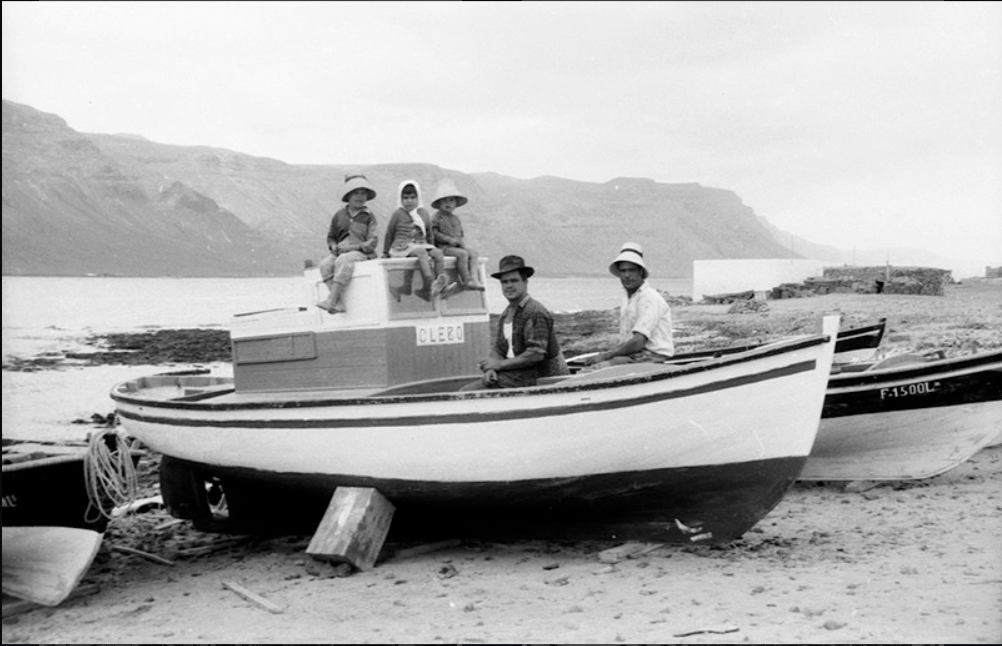
The strategic value of The Gracious, close to the African continent and its exceptional fishing hesitaries, endowed with abundant salt from the feet of the Risk of Famara, peaceful anchorage and with an ideal temperature for drying and salty, Despite the secular drinking water deficit, made it privileged space to host a Salazones industry.
The confiscation process and the reprivatization of communal assets in the Spain of the nineteenth century, The dissemination of numerous studies that highlighted the natural qualities of the island to implement this type of factories, together with the geopolitical context marked by colonialism, With the hegemonic powers distributing on an extended map on the table of an office, through squad and bell, the domain of the African continent and, therefore, The exploitation of their raw materials were combined to encourage this commercial adventure.
Nevertheless, The different proposals that requested the granting of these farms started from a capital error that would definitely lead them to failure. On the one hand, considering that African fisheries were superior to those of Terranova y, above all, for the belief that a species like Cherne belonged to the genus Years Morrhua The Bacalao del Norte, In his obsessive eagerness to compete with Norwegian imports. In this sense, An Italian report Enrico Stassano criticized the works of Glas, Berthelot y Silva, for estimating that they had perpetuated the false idea of the existence of a cod in the waters of the Canarian-Saharian heater as he collects Jesús Martínez Milan In your work African Canarian fisheries (1800-1914).
The first project that postulated The Gracious As the basis of a salting industry, he led him between 1852 y 1858 The Malaga Rafael Cappa Maqueda, Second Indian pilot, who constituted with the American Eduard Belknap Hodges society Rafael Cappa and company, that among its objectives it was expected to build a fleet of thirty ships of sixty tons, In addition to the endowment of infrastructure for the treatment of fish in the idea of competing in the peninsular market with the defendant cod imported from England y Norway.
In April of 1861, he Admiralty He granted him the concession and a year later Hood requested a period of validity of ninety years, that was denied in 1864. The fact is that the Malaga had died in 1863, being integrated society since then by Adela Clemencia Peraur y Juan Maqueda, wife and uncle of the deceased, In addition to the American Belkap, who promoted the construction on the island of two houses, A warehouse and a dryer. But fatality wanted to 1866 The widow also died, that was the beneficiary of the concession, and given the legal impossibility of its transfer to Belkap, Given your foreigner, Society ended up dissolving.
In a critical political and economic situation, The Valencian Francisca Gascón Segarra raised to State in 1868 The application to install a salting industry in The Gracious, petition granted, But the lousy economic and financial situation, added to the socio-political instability through which it was going through Spain They ended up sporating that project.
And the third would be the defeated. The protagonist, A GALLEGO OF NAME Ramón de Silva Ferro, Navy ship lieutenant and secretary of the Legation of Honduras in London, who following the wrong thesis of George Glas, Berthelot y Silva About the presence of cod in the heshes of the Canario-Saharian bank submitted its application to set up a salt industry in The Gracious dated 9 October 1871, And that would have the administration's parabienes a year later.
The truth is that given the impossibility of complying with the stipulated deadlines, in 1875 Ferro He requested the concession again -that same year until he published a book where he explained the different studies he had carried out for the installation of the factory- But by not having any financial aid to launch his project he was bound to ask for an extension for three more years that was accepted.
In November of 1880, transmitted to Admiralty His desire to transfer the concession to a Spanish company, so -called Canarian-African fisheries company, of which he was part as a founding partner and shareholder, and that was constituted in Madrid, a month later, With a share capital of 500.000 pitty, that only a year later had already evaporated.
This project had planned the purchase of eight candle ships of forty or fifty tons each, In addition to many other steam with the same tonnage. The constructions for the operation of the salting industry were composed of a building that functioned as a factory, Housing for operators and sheds. But society went bankrupt in November 1883, largely, as it holds Martínez Milan Because of substantial investments without an comparable return of income and for the erroneous effort of the company to direct its fleet to the southern coasts in search of the non -existent cod.
After that resounding failure, Ferro He did not cease to make his dream come true and at the beginning of 1884 He formed a new society with his friend Federico Rubio Gali, Under the name Gali and Cía, This time aimed at capturing herring, But fatality wanted Ferro died at the end of 1884 In the fishing bank, When colliding the bergantin Pelayo where he was embarked with the Bricbarca Exile of Canadian nationality and with him, fourteen years of Improble work thrown byboard.
The settlement of the island
There is no date that sets the exact moment that gave rise to a permanent human settlement in The Gracious.
In it Diffuse notebookn Cultural nº 32 of the year 2010, Francisco Hernández Delgado, points out that after the death of Ferro, In August of 1844, "Workers and their families (…) They decide to live in the funny one ". Once the Fisheries Society, This donated to workers and their families the facilities that had risen in The Gracious.
With dry stone and and remains of woods and materials from the old facilities of the factories a town of huts were raised, that would take the name of Caleta de Sebo.
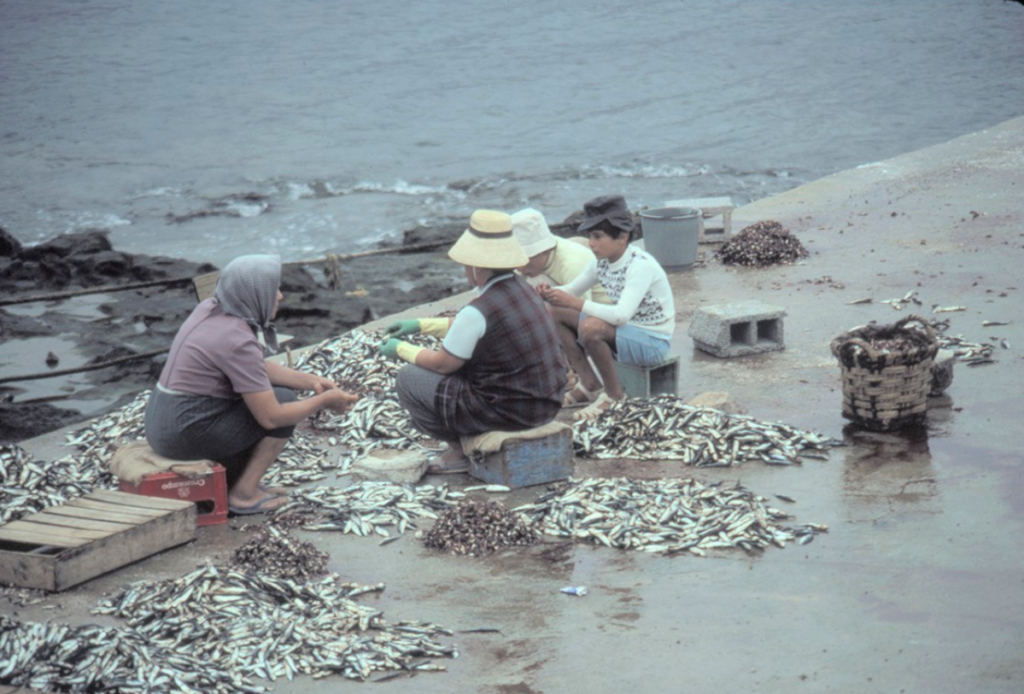
A different hypothesis is the one that defends Agustin Pallarés, who from oral sources states that the first settlers were four marriages that came from I would do, but they were residents as fishermen in the port of Arrieta. In such a way that it concludes that “the first stable settlement of The Gracious It must have occurred, All probability, In the second half of the eighties of the nineteenth century ”and from fishermen of Lanzarote, specifically of the people of Arrieta, that were not united by any labor bond to society.
In a job entitled Genealogy of the island of La Graciosa (2019), Felipe Enrique Martín Santiago The presence among the first residents of families originating from the island of The Palm, specifically from Garafía, which induces him to think that this reason could “motivate peculiar characteristics in the speech of funny people, different from that of the neighbors of Lanzarote”.
In 1887, The Gracious It was already included in the nomenclator with the name of Caserío de la Graciosa.
In the first years of the twentieth century, a group of families from I would do y Caleta de Famara They settled at the northeastern end, and following the example of the people of Sebo Caleta They were also permanently established, baptizing the place with the name of the famous sailor Pedro Barba.
Anthropological notes
Manuel del Río Suárez, Professor of Anthropology at Unit, holds in an article conceived as an anthropological approach, that the current funny population presumably descends from “the seven fishermen families in the areas of Arrieta y Reef that were established permanently in The Gracious”, based on the frequent coincidence of surnames and grades of kinship among the current inhabitants, that in his opinion entails a high degree of endogamy.
Besides, Among the characteristics that define this human group, the scholar stands out that this community "is aware of the demand to conserve its ecological system", Hence, it explodes "with delicacy", dice, the source of its survival and even its reason for being: The marine medium.
The one who was a professor of anthropology of the University of La Laguna, José Alberto Galván Tudela, Analyze in a communication entitled Local identity and festive ritualization (About the funny), Some social behaviors of these islanders.
Galván Explain that “Marginados Policy, Economically and administratively, Stereotypes were built on the funny, images that still last ”that are in
Some false measure. So, It has gone from conceiving them in volume at the years 50-60 of the last century in positive, Like the Great Arcadia, The great paradise, to other considerations that call them very proud, with a sullen character. For the professor “the funny ones are no less open than the fishermen of La Restinga (The iron), The Puerto del Carmen (Lanzarote), Alcalá (Tenerife) the agaete (Gran Canaria)”.
Precisely, Underline not that the party of the Virgen del Carmen es, both, a fishermen's party and a party to strengthen the island identity. But if any symbol, In addition to the Marine Virgin, is proper and above all specific to The Gracious is the ritualization of Italian burning, Nickname that the funny sailors received from the inhabitants of Arrecife on their return from Africa, Apparently because of the similarity in the color of its blue clothing, Yellow handkerchief and employment hat with the Italians who participated in the Spanish Civil War.
According to some authors, This ritual symbolizes the burning of our sins, "The bad thing we have inside", or also remember to burn the doll that the party is a passenger time.
"But, Unlike other Canarian towns, It is not drunk, an insult of a castra, in punishment. Only the neighbors pass ask the author of the same for whom it is, They laugh or express how well, never totally recognizing themselves ", Underline Galván Tudela. Instead of symbolically destroying the past, The funny look at the bowels of his history to identify himself as himself is: Funny, Funny, fisherman, ma- scratcher, Eighth Island, islander.
Cover photo: Javier Reyes Acuña/memoriadelagraciasa.com

