|
Listen to this article now
Getting your Trinity Audio player ready...
|
Chef Vicente Rioja explained at Palacio Ico how he prepares traditional Valencian paella. Y, and, It is very different from your brother-in-law's
| The phrase that heads the text -Life is too short to eat a bad paella- the chef pronounced it Vicente Rioja during the master class offered this Saturday, 14 February, in the charming patio of Hotel Palacio Ico, which hosts a restaurant with a Sun in the Repsol Guide and Michelin Recommended.
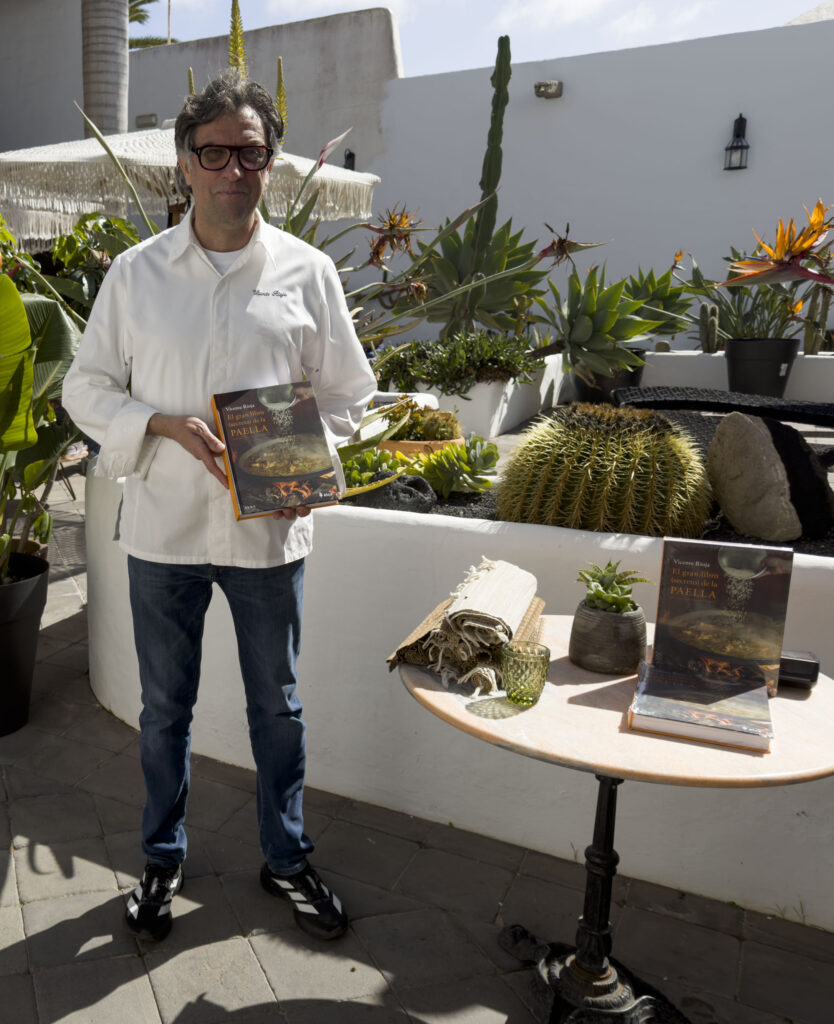
Rioja (Rioja House, Benissano) returned to Lanzarote to share the secrets of his paella, considered the best in the world, y, by the way, sign copies of the big book (secret) of the paella of which he is the author. He did it before a select group of diners, that they had paid 85 euros for the experience, and within the framework of the project 'Stars & Terroir’, that will take up the whole year 2026 and that will bring relevant chefs closer to the emblematic establishment in order to delve deeper into the diversity of Spanish gastronomic cartography.
The three “those” of the paella
With a style of communicating that captivates with its simplicity and clarity, the considered “Paco de Lucía of the paellas” (That's how he was baptized by none other than Quique Dacosta) was shelling, indeed, the secrets of your paella. Naturally, example of what he called the “three 'es'’ of the paella”: tasty, dry and loose rice.
From the fuel you use (wood from a certain type of orange tree subjected to special drying), until the final rest of the rice -preferably Sénia type and Extra Category- that follows the considered Valencian gastronomic sound: the socrato. Between one thing and the other, the importance of meat - rabbit, rustic with a brown coat and black eye and a chicken with red plumage and slow growth- the green bean, the paprika, the tomato, the sublime Valencian garrofon, agua, romero, saffron and stop counting. Or in pairs, because the procedure is complex.
Everything has its rhythms and times, to make the most of the organoleptic potential of the products and their nutritional properties. And then there's nailing the broth. That's another one.
Participatory paella
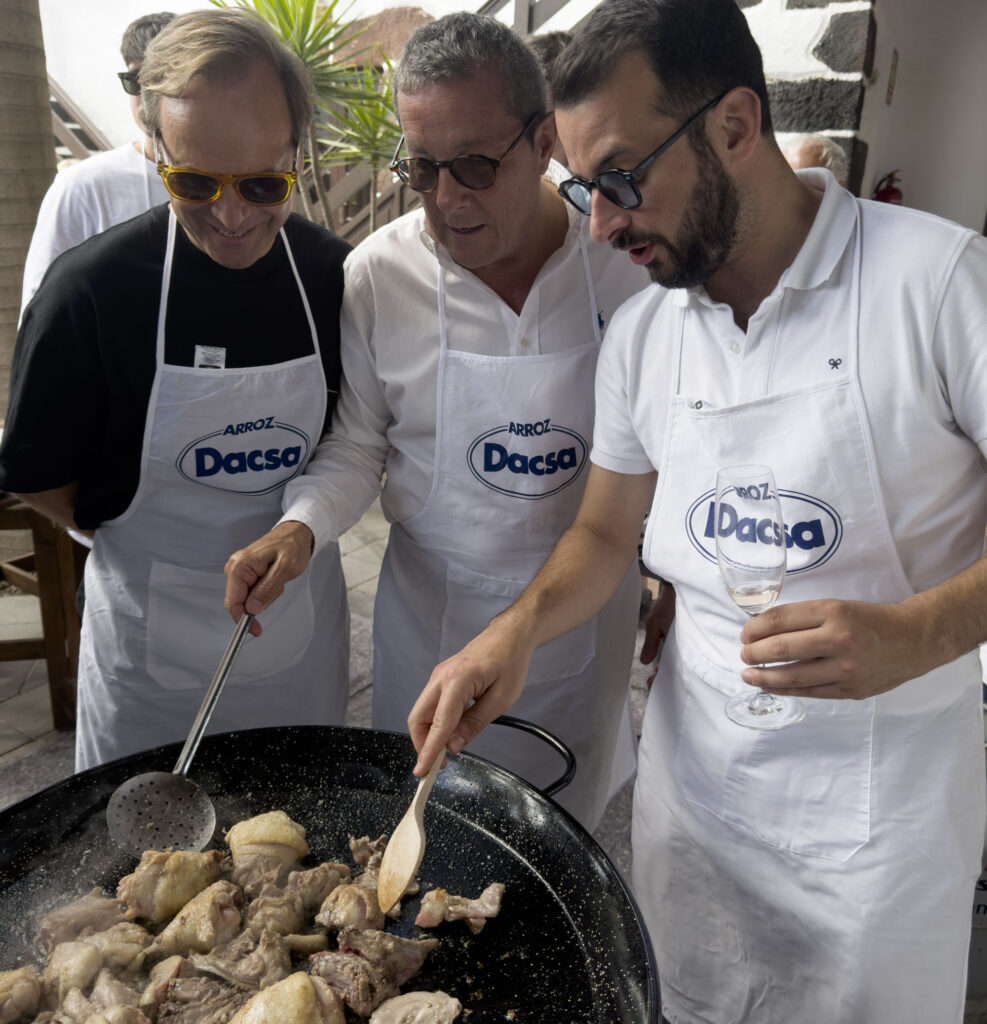
Divided into groups, The participants in the experience made a total of five paellas, under the supervision of Vicente Rioja. Slow browning of meats, slow stir-fries, agility with vegetables and saffron… and the symphony of broth to the beat of the fire dance. In Valencia, broth is not used for paella.: it is made in the paella. Once the meats and vegetables have sautéed for the necessary time, an amount of water is poured that will vary depending on multiple factors: the main the amount of rice, Of course, but also the altitude with respect to sea level of the place where it is made and the diameter of the paella. To get an idea, in Palacio Ico and for 600 grams of rice, 6.9 liters of water were used. twenty minutes later, had been reduced to approximately 2.1. And there the rice was thrown.
Everything narrated by chef Vicente Rioja, and hastily summarized here, It aims to appreciate the pure and clean flavors of the ingredients in this traditional recipe. And make it genuinely light. Of gentle digestion. Y, of course, has another perhaps more relevant mission: disseminate and be appreciated as such, this piece of heritage and culture of a land that will have as many paellas as there are paelleros offered, and, but that obeys the established liturgy and makes this bite an exceptional paella, just in case it's true that life is short. Y, of course, it's better, far better, than your brother-in-law's.
The paella
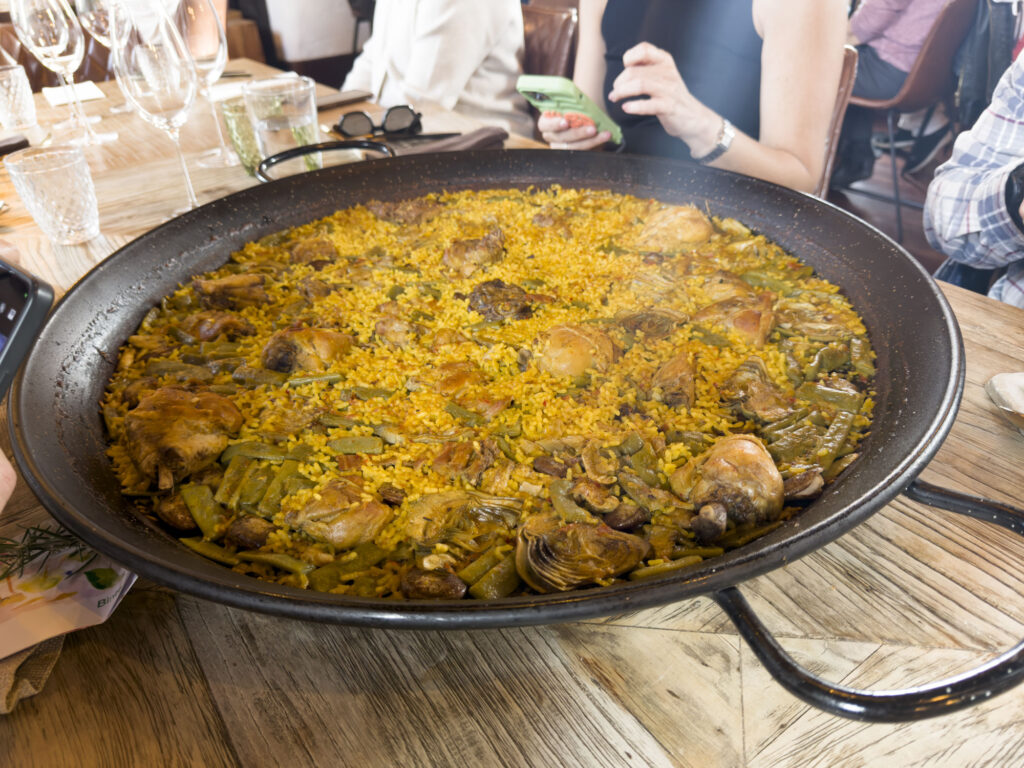
At the event, in which he collaborates Taste Lanzarote, The diners served the paellas as tradition dictates.: with a spoon and directly from the paella, without leaving each one of his plot (cuña) assigned. The kitchen of Ico Palace took care of some tasty and delicate starters, of a light and restorative dessert and cava, champagne and white wine from their select winery. In total, about six hours socializing around the preparation and tasting of paella in an event with taste and quality, at the level of those who Sonsoles Lopez y Eduardo Riestra They usually offer a priceless contribution to the enrichment of the gastronomic culture of residents and visitors..
the big book (secret) of the paella
A book in which Vicente Rioja, fourth generation of the family restaurant they run in Benissanó, has compiled an enormous historical documentation and unraveled the secrets of all the ingredients and the complex culinary process of a paella.
It is a complete work about the culinary heritage of a people that for a long time was preserved in the domestic kitchen that Rioja discovers and completely reveals..
The ingredients: tradition, origen, dear, generosity, rigor and science. And furthermore, honesty and truth.