


|
Listen to this article now
Getting your Trinity Audio player ready...
|
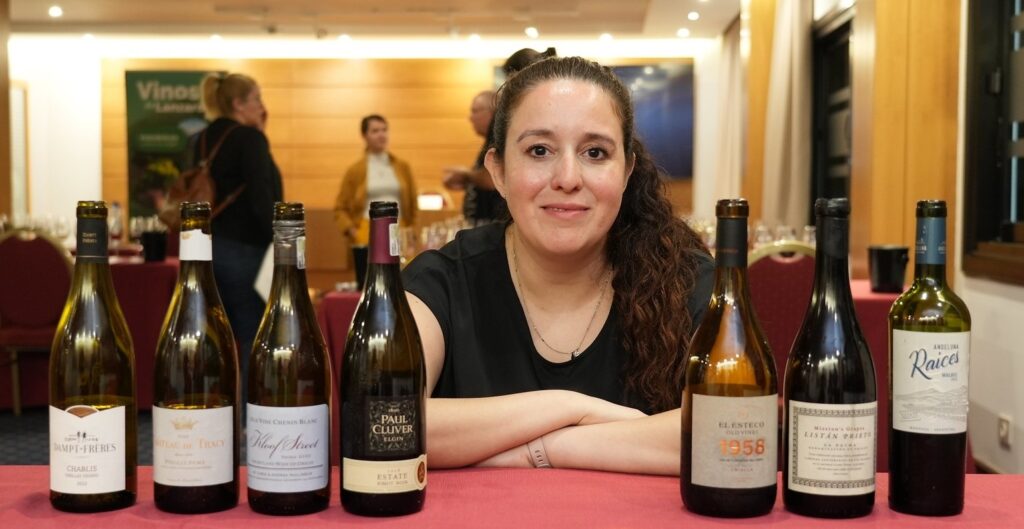
The Argentine sommelier Natalia Gabriela Pacheco taught the masterclass of the Specialist Course in Sensory Analysis of Wines-Advanced Level of the ICCA and the ULL
The Argentine sommelier Natalia Gabriela Pacheco gave the closing master class of the Specialist Course in Sensory Analysis of Wines – Advanced Level, organized by the Canary Islands Chair of Agrotourism and Wine Tourism of the Canarian Institute of Agri-Food Quality (ICCA) and of the University of La Laguna (ULL), for students at the Tenerife and Lanzarote campuses. Their participation highlighted the uniqueness of Canarian wines and the interactions of “terroir” in wines from different regions of the world..
During his intervention, Pacheco shared valuable reflections on his professional career and the evolution of the wine sector. He highlighted that the greatest learning that his experience in sommelier has left him has been “recognize that I never stop learning”. The world of wine, pointed out, is constantly evolving, and there are always new discoveries to be made.
In relation to the evolution of Argentine wine, Pacheco highlighted the diversification of its offer and the strengthening of its global identity, with Malbec as a banner. Exploring new terroirs, The recovery of native varieties and the commitment to sustainable practices have consolidated Argentina as an international benchmark.
About training in sensory analysis in Canary Islands, The sommelier stressed that the Chair of Agrotourism and Wine Tourism plays a crucial role in raising awareness and training about the exceptional nature of the Canary Islands context., with its native varietal biodiversity and centuries-old vineyards free of phylloxera. The influence of the volcanic soils and the unique terroir of the islands challenge professionals to explore unique sensory nuances.
Pacheco highlighted the identity and differentiation of Canarian wine in the international market, highlighting its peculiar character, result of the adaptation to extreme conditions and the viticultura heroica. The absence of phylloxera and the conservation of ungrafted vineyards and centuries-old vines, along with native varieties and the influence of volcanic soils, They give Canarian wines a unique and attractive identity for consumers looking for unique experiences..
Regarding trends in wine consumption and training at a global level, Pacheco observed a growing inclination towards fresher and more versatile options, like white wines, pink and light. He also highlighted the relevance of wines with a lower alcohol content and no alcohol., as well as interest in sustainable practices. The integration of digital tools in training allows a greater connection with global trends.
Finally, Pacheco expressed his gratitude for the enriching experience lived in Canary Islands, where he had the opportunity to explore his wine culture and connect with students and passionate producers.
Advanced level training in wines
The recent Specialist Course in Sensory Analysis of Wines concluded successfully, training around thirty students in advanced knowledge and technical skills. This program, promoted by the Chair of Agrotourism and Wine Tourism of the Canary Islands, belonging to the Canary Institute of Agri-Food Quality and the University of La Laguna, seeks to strengthen the Canarian wine sector. The deputy director of the Chair, Gabriel Santos García, highlighted the relevance of this training for the development of the sector.
One of the new features of this edition was the decentralization of the course, offering locations in both Tenerife and Lanzarote. The Lanzarote headquarters was possible thanks to the collaboration of the Regulatory Council of the Protected Designation of Origin Wines of Lanzarote, which facilitated access to training for the students of this island. This initiative underlines the commitment of the Chair to the equitable development of the sector throughout the Canary archipelago..

