


|
Listen to this article now
Getting your Trinity Audio player ready...
|
I discovered raicilla in the recent conference organized by Pedro Nel Restrepo at the Etéreo restaurant (Santa Cruz of Tenerife, Two Repsol Suns)
It is clear that there is so much to rediscover about foreign gastronomic cultures that some knowledge falls really short and in the case in question it happened specifically with Mexican distillates..
I discovered the raicilla –write down this name- At the recent conferences organized by Pedro Nel Restrepo in the restaurant Etéreo (Santa Cruz of Tenerife, Two Repsol Suns). The chef returned the courtesy to the representatives of Vallarta Port (Mexico) who had invited him at the end of 2023 to participate in one of the most famous gastronomic festivals in America.
At the pre-presentation breakfast, traditional already in each event of Etéreo, We were able to try the pot coffee 'baptized' with raicilla. Formidable, categorical in its smoky nuances full of finesse.
It is an artisanal agave distillate from the municipality of Cape Corrientes and other regions of the state of Jalisco. The raicilla is attached to a lot of history, tradition and custom, and Mixology professionals such as Mario Alberto Mendoza (Malberto Mendoza) They are the guardians of a legacy passed down for generations.
A taste value with very unique characteristics that takes us out of the woods., horse and king' of tequila or mezcal to which we are accustomed in these latitudes. So that, of the aforementioned coffee, Some colleagues, apart from echoing them, even repeated the cuteness of such a combination..
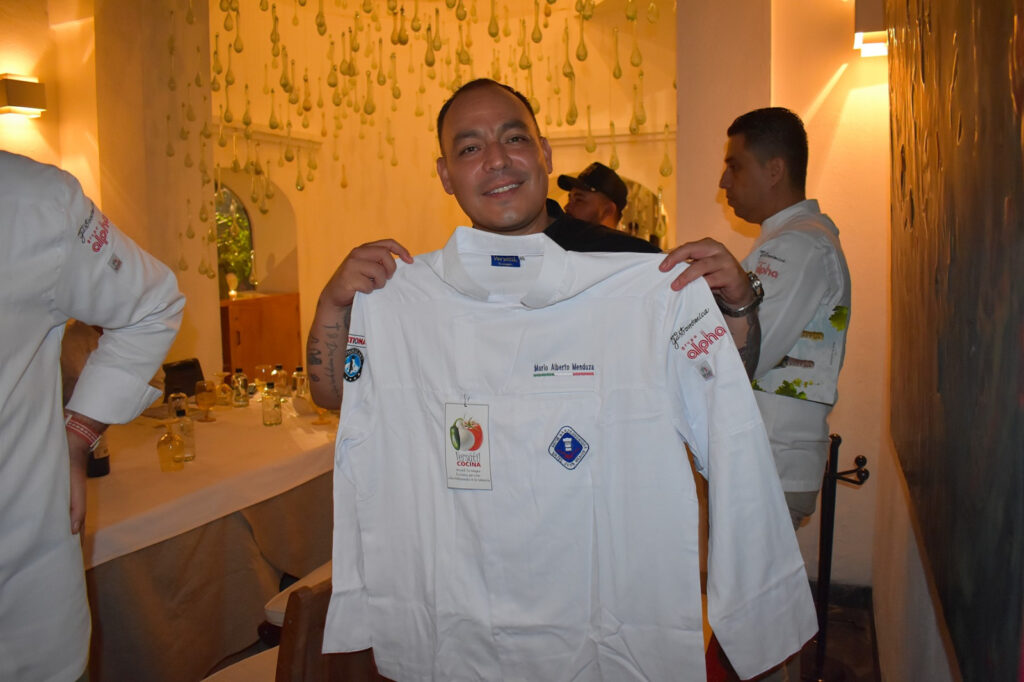
So that, Mendoza presented a fabulous cocktail at the conference. I thought it was fantastic, very nice. “Marcilla”, a very pure root cream, original, made on the coasts of the State of Jalisco. It has a designation of origin since 2019 and it is done only in said State with 16 municipalities and one of Summer time.
The combination resulted from the subtle combination of cinnamon with star anise, panela and Mexican vanilla and, of course, with the cream Divisadero Hacienda House. It was served in the bowl of cuastecomate fruit, which is used in Mexico as a remedy for lung diseases, respiratory tract and other conditions; spectacular mixing with eucalyptus.
The Marcilla –explains Malberto- “It is made of the sea and the roots of those coasts of Jalisco”.
The legend
Malberto tells the legend of the goddess of the agave, Mayahuel, just as he did at the aforementioned presentation breakfast.
"In Mexico, for us the goddess of the agave Mayahuel It means joy for those extraordinary distillates that are made from the cactus.. Legend has it that the god Quetzalcoatl (Beautiful feather snake) As a warrior, he had the task of defeating the goddess of darkness. Ayotchin. He set out to beat her and took courage - says the prestigious bartender -.
He traveled to the kingdom but did not expect that he would meet his granddaughter, Mayahuel. He fell in love with her at first sight and forgot, for love so unfathomable, the relevant assignment. Mayahuel He marched to earth with the warrior.
Their grandmother was so upset by this love that she decided to turn them into bushes.. Ayotchin, very angry, He went to the ground and spent all his fury against one of the bushes: the wrong one! He had killed his granddaughter.
Quetzalcoatl saddened. He carried the body of Mayahuel and climbed a very high mountain; There he prostrated the first agave plant in the Central American country to flower.. Then he went to avenge her death by destroying the goddess of darkness and making light reign over the face of the earth..
Nevertheless, Quetzalcoatl He lived very sad and the gods realized it... So they decided to give him joy through the first ancestral drink, which was pulque., a fermented product from the center of the agave made with the mead of the same plant.
That's where the joy that tequila generates comes from., the mezcal, the root, bacanora (State Sonora)… Mexico It has four agave distillates with designation of origin “but we have many more”, points out Mendoza”.
From mezcal – agave cooked in the Nahuatl language- Tequila emerged because there was a difference in the plants based on the studies of a French botanist; He discovered certain properties in the blue agave plant.
The designation of origin of tequila comes in 1974 and was declared as the only drink of Mexico and protected by UNESCO. Posteriorly, in 1994 The designation of origin is granted to mezcal and it is made in different regions.
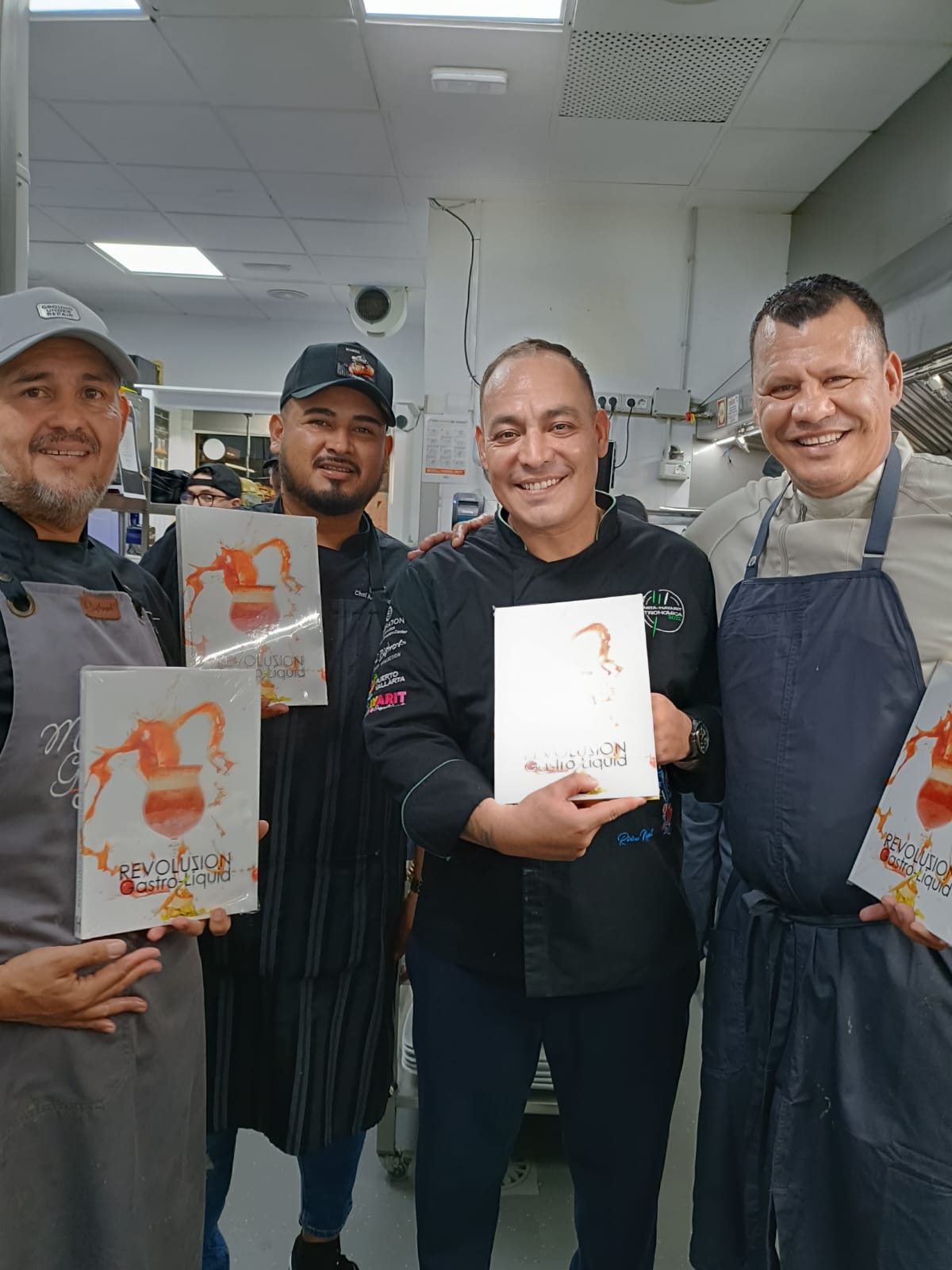
Mention to the Canarian book “Revoluzión Gastroliquid”.
Malberto Mendoza and the guest chefs were presented with this great gem published by Hecansa, currently with Paola Plasencia in front, and the work of mixologists Oscar Lafuente y Gorka Pérez, and the chefs Diego Schattenhofer alreadyAlejandro Bello. "It's a delight, really, this compendium in which the world of liquid gastronomy – highlights Mendoza– takes all the importance. Currently we in Mexico “We are committed to exalting the liquid field through a large human group of bartenders who promote that Mexican liquid culture wherever we travel.”.
“I love the idea that in Canary Islands and in Spain do the same and also show these perfect pairings, extraordinary accompaniments in every cocktail. It is a true revolution and it is current; Contributing these suggestions to society also represents a wealth of teaching for new generations of mixologists.”, asserted.
Notes for a summer cocktail
Mendoza's compliance with platocanario.es a combination with a Mexican accent and the most refreshing for these hot days made with mezcal. He calls it “Jaguar”.
Consisting of one and a half ounces of mezcal, the same amount of natural passion fruit pulp (fruit of passion) and add three sprigs of mint with everything, including stem.
Now there is a touch of agave syrup and if we don't get it, whatever we like will also do.. Let's incorporate, in addition, 30 ml of lemon. It mixes; In a shaker, shake vigorously with plenty of ice..
We also frost it in the glass and add a pinch of chili powder or tagine salt.. It goes very well to accompany a cheese board, cold meats or ibérico jamón.

