|
Listen to this article now
Getting your Trinity Audio player ready...
|
Two unique tastings of volcanic wines close the third day of the congress, claiming their great diversity and quality
Worldcanic has closed its fourth edition claiming the broad family of volcanic wines and renewing its commitment to the people of the volcano to continue in Lanzarote until 2027, as the president of the Lanzarote Council advanced Oswaldo Betancort on the opening day. “Worldcanic will continue with us in 2025, in 2026 and in 2027”, the president assured while explaining that “Lanzarote will continue to position itself as the world epicenter of gastronomy, volcanology and sustainability to follow knowing the diversity, the uniqueness and richness of the cuisines and volcanic ecosystems”.
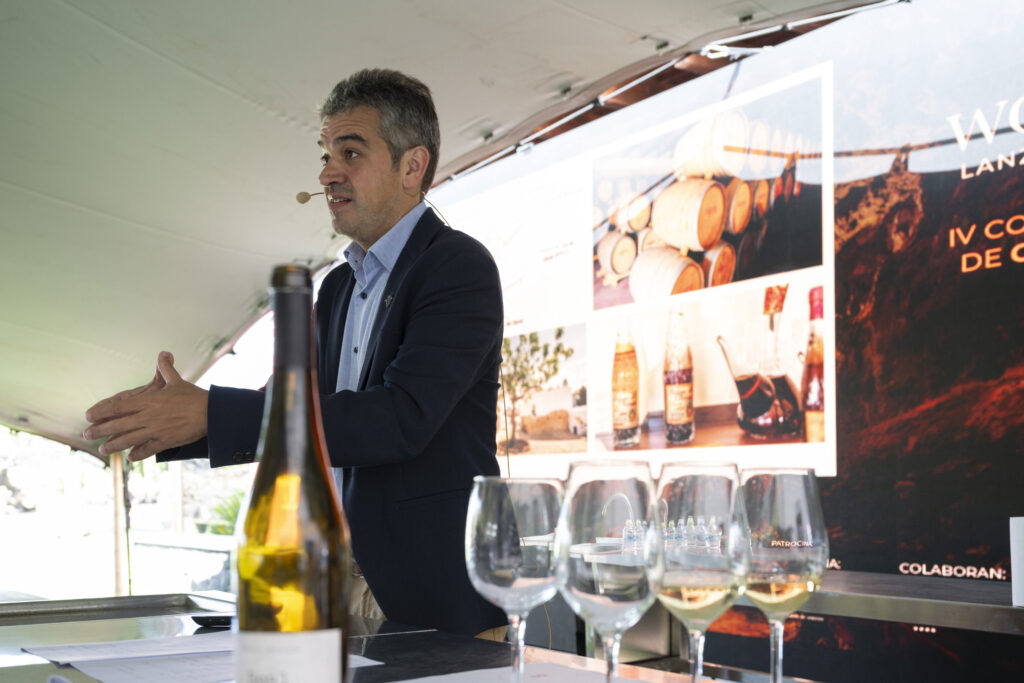
Proof of this richness and uniqueness have been the two unique tastings that have taken place on the last day and which confirmed the good moment that volcanic wines are experiencing. One of the entrance doors to La Geria, specifically the La Florida Wineries, It was precisely the place where the last day of the congress took place with the presence of two great sommeliers who enlightened the attendees about the characteristics and value of this great family of wines..
John Szabo talks about "Wines" volcanic, and plural
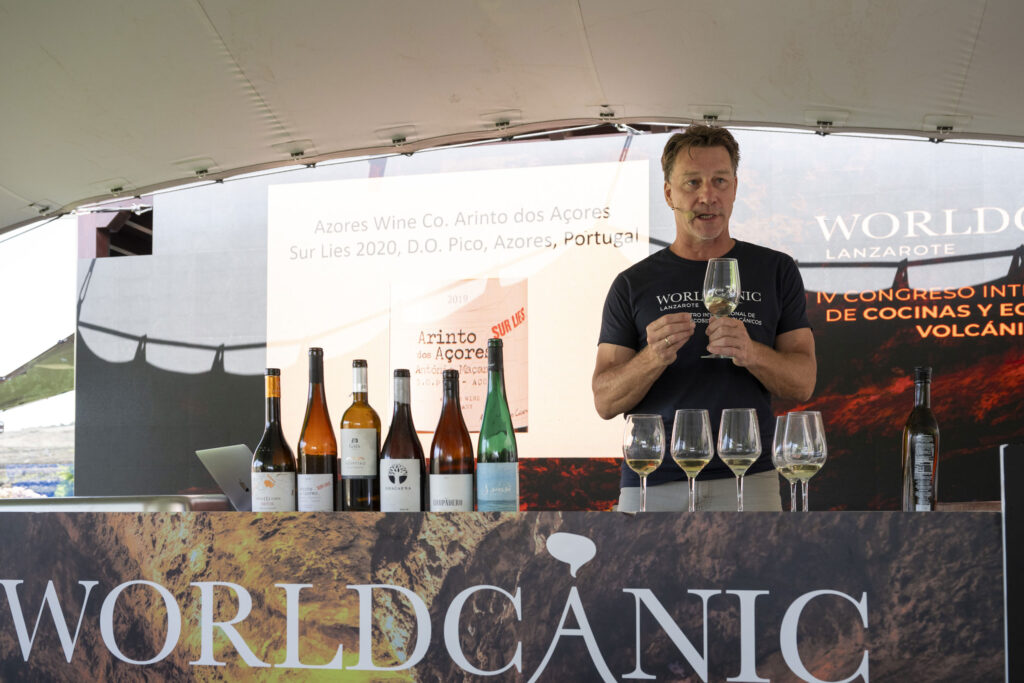
The one who has been the prize Worldcanic of this edition, the world's most important volcanic wine expert and master sommelier John Szabo, has been categorical in stating that “volcanic wine does not exist”. It wasn't intended to be controversial., well on the contrary, Its intention was to highlight the great wealth that exists within the family of volcanic wines.. “We must always talk about volcanic wines, and plural", the Canadian sommelier warned, “wines that can be found all over the world and that make up a large family in which each one has its own particularities”.
The great variety of volcanic wines is due to the fact that “each volcano has its own ecosystem and that is reflected in the wines that grow in their territories.”, explain John. If they are ancient volcanoes, extinguished or active, the composition of the lava or the concentration of minerals are - among others- factors that affect wine. Even with this, The sommelier also warned that some points of contact can be established between all of them.. “Almost all volcanic wines are acidic, little fruity and a certain salinity is even palpable in them due to the high concentration of minerals in the volcanic soils”, illustrated
Szabo, who also did not forget to highlight “the density and dryness of these wines derived from the little water retention that volcanic soils have”.
To demonstrate that “volcanic wines are unmatched”, Szabo He accompanied his words with a very special tasting of volcanic wines from various parts of the world., from Greece passing through Italia, Hungary or the Azores Islands and the Canary Islands.
sparks: "Malvasia does not exist"
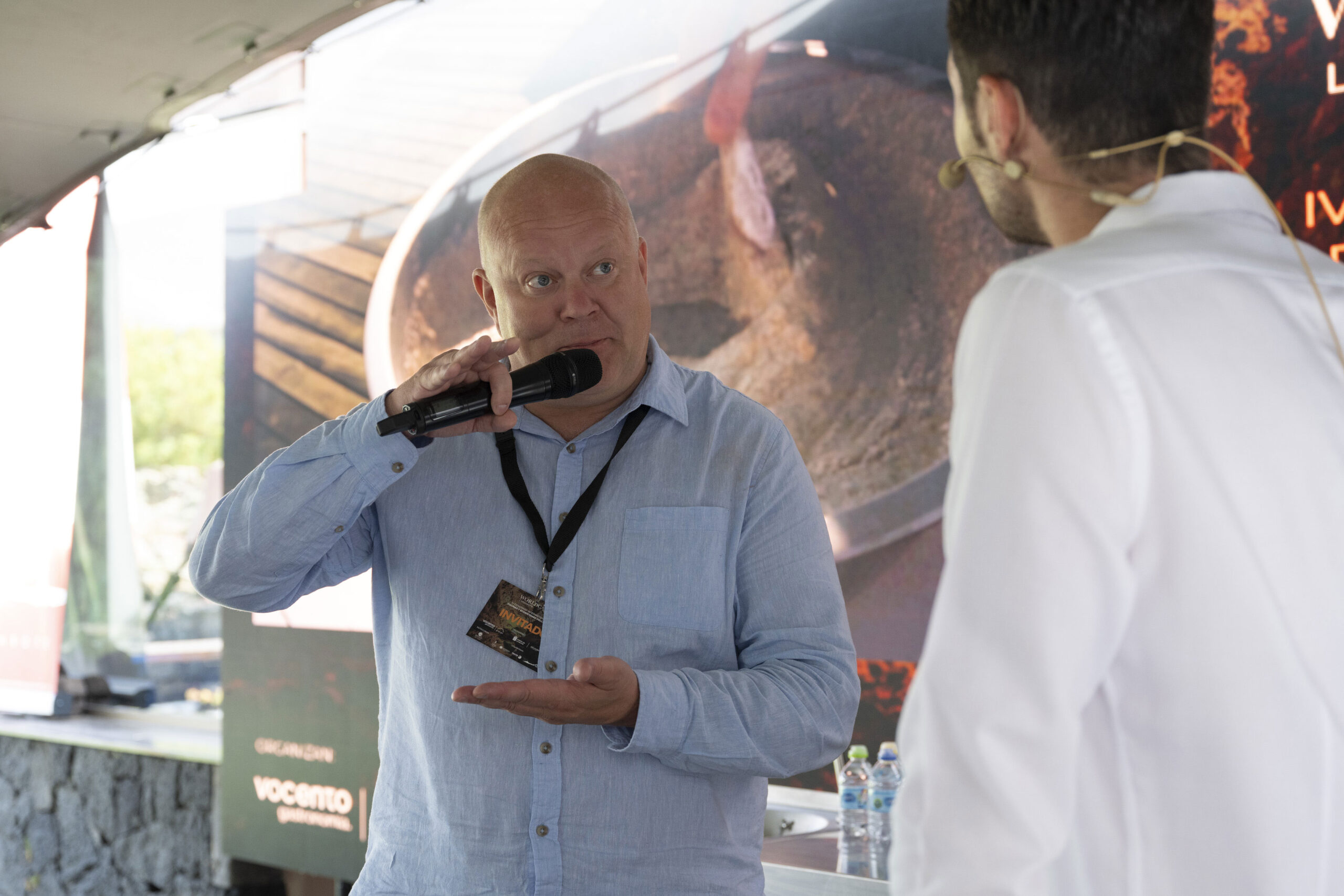
Of these last, and specifically of Lanzarote, the sommelier also spoke Ferran Centelles who has given a practical and master class on malvasía, a generic term for one of the oldest grape families in the world. The most repeated message during your tasting has been precisely that: “Malvasía is a generic name that covers more than 60 varieties, classified according to the amount of terpenes, organoleptic characteristics of aroma and flavor, and genetically in three very different families from each other. Therefore, Malvasia does not exist. “There are multiple varieties of it.”.
The former sommelier of elBulli stating that Lanzarote has a real treasure in its volcanic malvasia, “enormous potential to exploit”, but at the same time he warned that “it is necessary to sell it better”.
Fertile soils and hot springs that activate volcanic cuisine
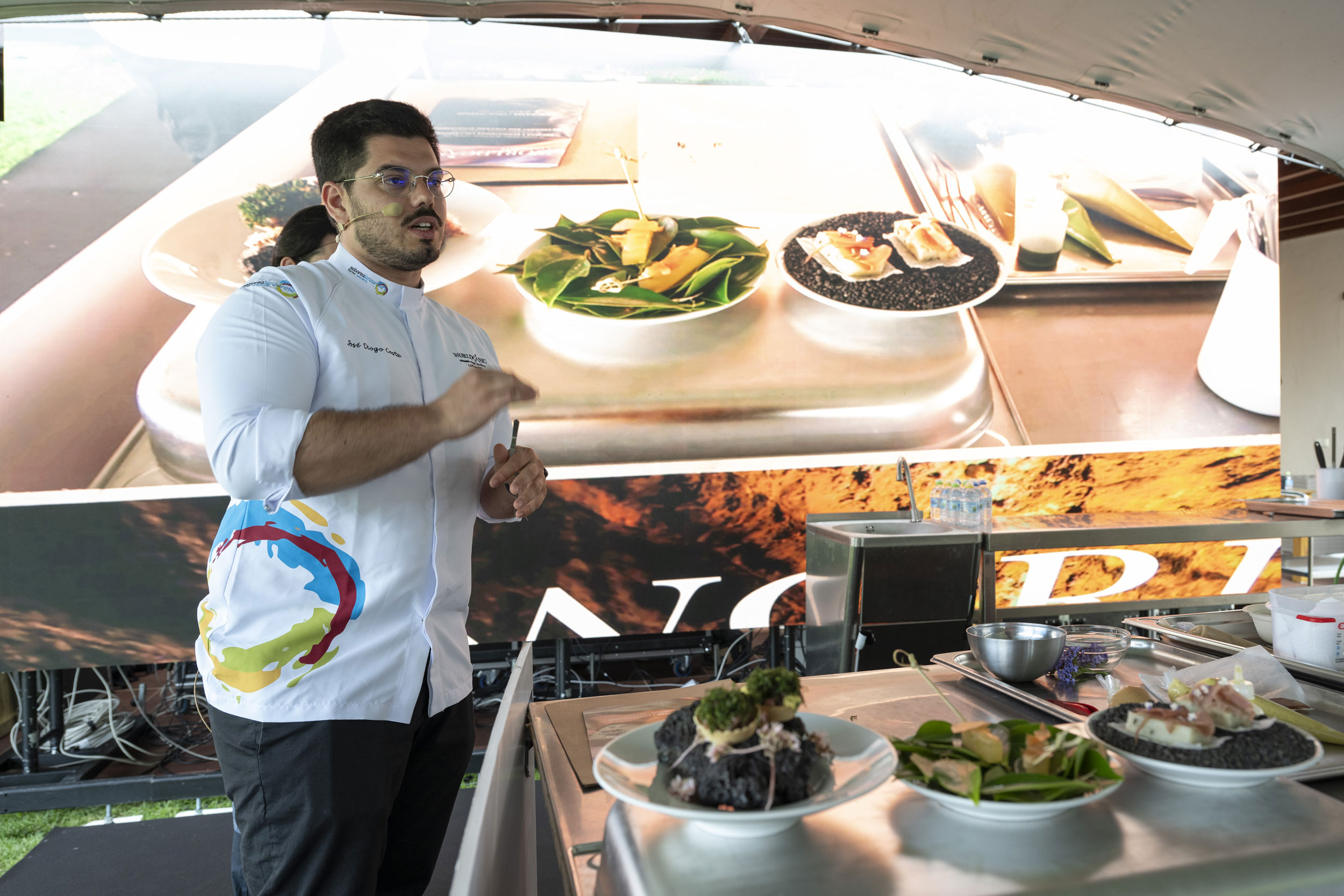
The volcanic cuisine of the day has fallen on two international speakers from two contrasting landscapes: Portugal and Iceland. The first of them has been José Diogo Costa, in charge of the kitchens of the restaurant located in the Reid's Palace Belmond Hotel (William*, Funchal, Portugal), who has valued the rich pantry of his native Madeira. The chef joked that “Madeira is much more than wine and Cristino Ronaldo”, a statement that contained a clear vindication of the local product. Costa explained that the uniqueness of the Madeira product lies both “in the fertile volcanic soils of the island as well as in its subtropical climate.”, “two characteristics that allow you to grow a wide variety of fruits and vegetables”. The Portuguese added that having this large pantry inspires José Diogo Costa to “explore it through the knowledge of the local people.”, producers and cooks” and thus recover preparations, ancient techniques and recipes that would otherwise be lost.
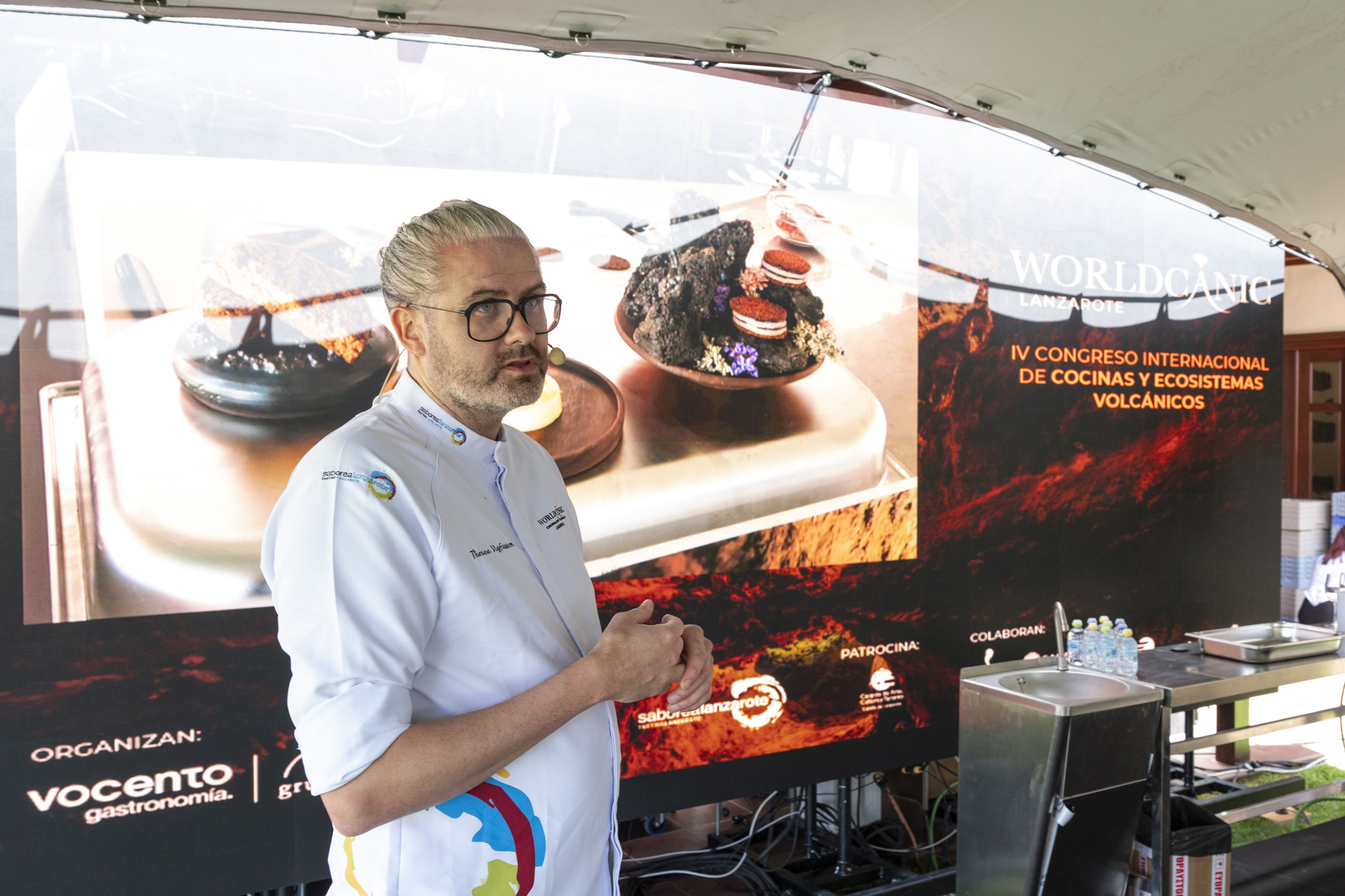
He agreed with Costa in the demand for local products, the icelandic Thrainn Freyr Vigfusson. With the, Worldcanic reproduced the Icelandic tradition that uses the thermal waters of its multiple geysers to bake bread. In Iceland, bread is a basic product - “if there is no bread in our meals, “we are missing something”, Thrain's account- and its traditional rye bread is steamed and buried (protected) near hot springs to bake for a few 24 hours in natural heat. “The result is a bread with an intense flavor., with perfect balance, very soft and tender”, explained the chef of ÓX* (Reykjavík). The bread is accompanied with the also traditional Icelandic skyr butter., what is “like a kind of yogurt with a low level of fat but a lot of protein. Its flavor has a cured touch and a sour aftertaste”, Vigfusson concluded..